Crawlspace Insulation Replacement
Home » Crawlspace Cleaning » Crawlspace Insulation Replacement
Crawlspace Insulation Replacement Services in Portland, OR
Insulation in the crawlspace frequently suffers catastrophic failure due to water damage, humidity saturation, and pest infestations common in Portland homes. Once traditional fiberglass insulation becomes wet or is compromised by rodent nesting, its effective R-value plummets, rendering it useless for temperature regulation. Sagging, moldy, or missing insulation leads directly to cold, drafty floors, dramatically higher energy bills, and the transfer of unhealthy air and moisture into the living space above, severely compromising the home’s comfort and energy efficiency.
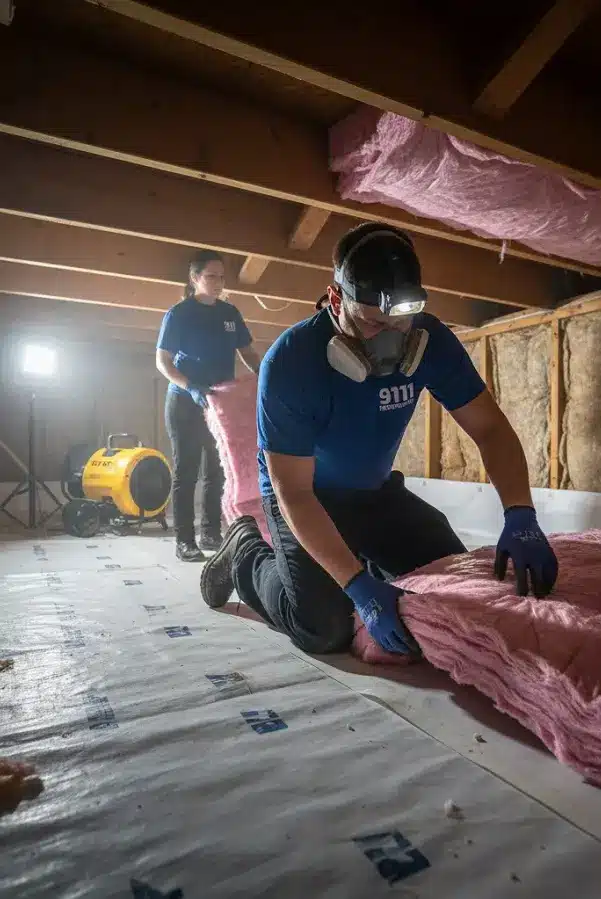
Our Crawlspace Insulation Replacement service begins only after the moisture source has been permanently corrected and the structure is verified dry and mold-free. We safely remove and dispose of all old, contaminated, or damaged insulation. We then install new, high-performance insulation—often closed-cell foam or specialized batts—specifically chosen for its superior thermal properties and moisture resistance. This meticulous replacement restores your home’s thermal envelope, cuts down on heating and cooling costs, and ensures a clean, dry, and energy-efficient barrier beneath your Portland property.




REVIEWS
Trustindex verifies that the original source of the review is Google. I cannot recommend 911 Restoration highly enough. When my basement flooded, their team was at my home within hours and immediately took action to address the damage. My rep, Richard Brown, was exceptional. He is clearly experienced and knowledgeable, but what stood out even more was his empathy and calm approach. I was panicked, and he took the time to walk me through every step of the process, laying out the issues and solutions clearly. He even spoke directly with my insurance agent, which made the entire process much easier for me. Richard’s team, including George and Melvin, were equally outstanding. They were professional, kind, and thorough. Every person I interacted with from 911 Restoration demonstrated the same level of care and professionalism. They turned what could have been a nightmare into a manageable experience, and I walked away with total confidence in their work. If you are facing water damage or any restoration issue, 911 Restoration is the company you want by your side. They are responsive, compassionate, and true experts in what they do.Trustindex verifies that the original source of the review is Google. We can't thank the entire crew and staff for their concern and service. The job definitely started with finding out why our floor was warping and where the water was coming from. The reassurance that they would take care of contacting contractors to handle the plumbing that needed to be dealt with, the flooring and cabinetry that needed to be replaced was such a relief for us. First though they had a lot of work to deal with under our house before they could even start inside - hot water breaks cause so much immediate damage. These guys worked so hard and continuously getting all the insulation under one side of our house removed so they could expose the pipes and find what needed to be done before the plumber got here. The multiple days of drying, and finding they needed more fans were needed to get this dried out. They always had such a great and caring attitude, took great care in keeping our house as closed off from the mold exposure as possible. Since we have a number of pets we didn't want them to be boarded so we chose to stay here while they worked. They never once let on this was more inconvenient for them than not. They understood the stress both animals and humans were having here. Not that I ever want to go through this again, but if I had to we would call 911 first. You folks are awesome from day 1 to the finish.Trustindex verifies that the original source of the review is Google. Our sewage line backed up TWICE and turned into a total nightmare. We were really nervous because after getting quotes and schedules from 3 other companies, we were losing hope that nobody would be able to help us. These people absolutely nailed it!!! Fair pricing, exceptional level of detail to their work, and they were so polite and courteous around our home. Richard who came and gave us a quote was kind and professional, and his crew that did the cleaning, Alex and another man with a script tattooed on his arm, were literally so nice we were raving about them after they left. Most polite and respectful workers we’ve ever had in our home and we would have them back in a heartbeat. THANK YOU!!Trustindex verifies that the original source of the review is Google. We had a recent water leak from our second floor down into our first floor and into the crawl space! Rich did an amazing job telling me what I could expect during the mitigation phase (cost, visits, materials, and equipment needed). Mel, Scott and the team did an amazing job daily coming to set up equipment for drying the damaged areas and ensuring that things were progressing. Very friendly, courteous, and professional. Would highly recommend if you’ve had a leak and are in need of mitigation.Trustindex verifies that the original source of the review is Google. We received quick response and service. they worked with our insurance company. Very satisfied.Trustindex verifies that the original source of the review is Google. 911 restoration of Portland turned an extremely negative situation into one where I felt empowered to make informed decisions. Aurelius showed up with an hours of my phone call and I felt like a high priority. They worked with me to address my needs and my concerns. I would highly recommend you consider using them if you find yourself in a similar situation. They understood my financial limitations and worked with me to find a solution that worked within those constraints, without making me feel pressured to take on more than I could afford. Not only was their team in the field, upbeat and friendly, but the owner Moe reached out to me personally to see if he couldn’t make it even better. I very much appreciate their approach and their prompt response.Trustindex verifies that the original source of the review is Google. I can’t recommend 911 Restoration enough! After my salon flood, they showed up incredibly fast and handled every step of the remediation process with total professionalism. As a woman, I don’t always have the best experiences with contractors, but their team made me feel completely comfortable and earned my trust from day one. The entire process was smooth, stress-free, and handled with great care. I’m beyond grateful for their help—highly recommend!Trustindex verifies that the original source of the review is Google. In our home, the washing machine and dryer are in the center of the house. Imagine my surprise when I looked up from the computer and saw a flood of water working its way toward me. I contacted 911 Restoration and they came right out with several de-humidifiers and heater/dryers, put them everywhere, even in the crawl space, and let them do their thing for a few days until everything was dried out nicely. They had to take a lot of the carpet out, too. Then they called Portland Construction Solutions to come and do all of the hammerin' and nailin', install new carpet, everything back to normal, even fixed the drain where the hose had popped out. I was SO impressed with how they kept in close touch with me, explained the process. I definitely recommend both businesses for any one who might have a similar problem. Excellent job - nice people!Trustindex verifies that the original source of the review is Google. I’ve owned homes since 1989 and had never filed a claim or had a disaster of any kind. When I woke on one Sunday morning, to find I had a water leak that went from the top floor to the bottom floor, on through to the crawl space , I had no idea who to call or what to do. I was panicked!! Not only did 911 Restorations on call team, call me back immediately, they sent Richard out to save the day and my house from further damages. Their team began water extraction, carpet and lower wall removal, a ceiling opened up, and had dehumidifiers and fans going within a day. There was no way mold was setting in with their fast response and action. Not only did they get into action, they walked and talked me through step my step exactly the process that I could expect and what they said was exactly what took place. It was so reassuring to know they were knowledgeable and I could trust them in a situation I didn’t know anything about. In addition to the mitigation, they scheduled my move out so I could begin my restoration process with ease. Moe and the billing office were so patient with me when I had some issues with an insurance mixup causing a delay in payment. Thank you 911 for your professionalism, your compassion in a panicked situation, your knowledge so I could stay calm, knowing you had this covered, and your extreme patience!! I hope no one has a disaster, but if they do, I’m recommending you without a doubt.Trustindex verifies that the original source of the review is Google. 911 Restoration was fast, accurate, on time and very customer service oriented. Every employee was great to work with. 911 worked well with my insurance company too. Highly recommend these guys.
Our 3-Step Crawlspace Insulation Replacement Process
Removal, Disinfection, and Dry Verification
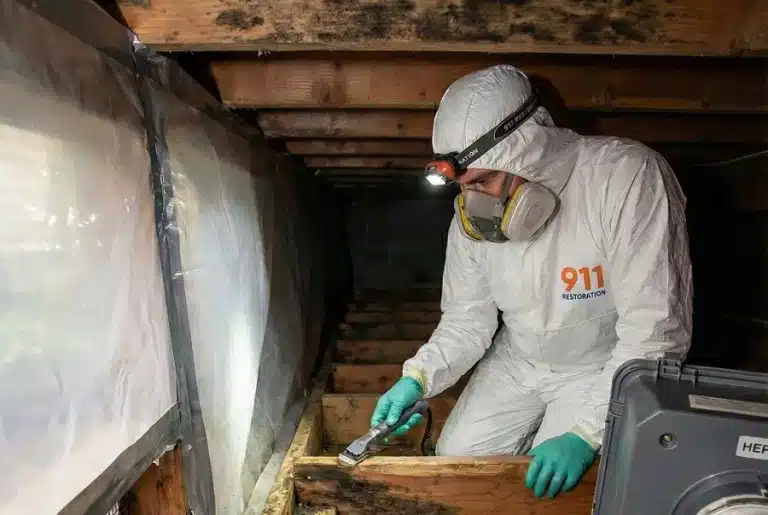
We safely remove all old, damaged, sagging, and contaminated insulation and bag it for proper disposal. The exposed subfloor and joists are thoroughly cleaned and disinfected to remove any residual pest debris or mold spores, and we verify the structure is fully dry.
Air Sealing and New Insulation Installation
We air-seal any major gaps, cracks, or utility penetrations in the subfloor before installation. We then install high-grade, code-compliant new insulation, carefully ensuring proper fit and full, seamless contact with the subfloor to maximize the thermal R-value.
Post-Installation Cleanup and Barrier Protection
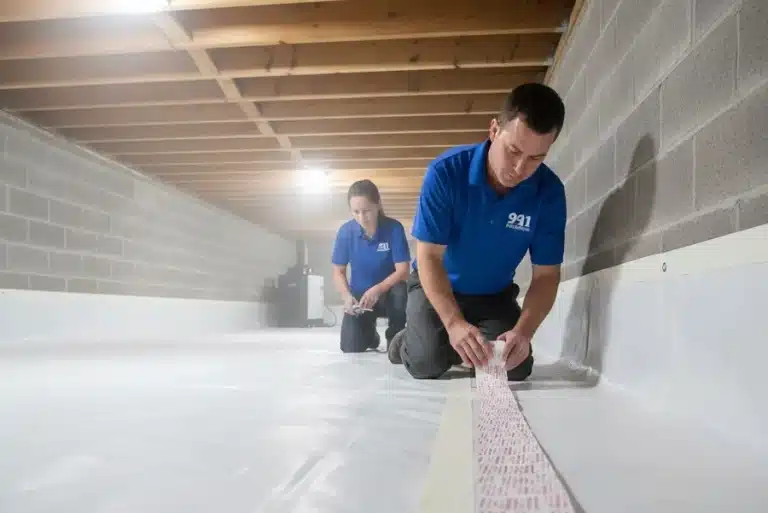
We clean the crawlspace entry points and conduct a final inspection of the new installation. We verify that the new insulation is properly protected by a new, intact vapor barrier and is ready to deliver maximum energy performance.
Q&A
Why is wet or damaged fiberglass insulation not worth trying to save or dry out?
Fiberglass insulation works by trapping tiny pockets of air to resist heat flow. When it gets wet, the water displaces the air, causing the insulation to mat down and completely lose its thermal resistance (R-value). Furthermore, saturated insulation becomes a massive, continuous source of humidity for the structural wood and may harbor mold spores, bacteria, and pest debris. It is always safer and more cost-effective to replace it than attempt a salvage.
What is "R-value" and how does proper insulation replacement affect my energy bill in Portland?
R-value is the measure of thermal resistance—the higher the number, the greater the insulating power. Sagging or wet insulation allows cold air into the floor above, forcing your furnace to run excessively. Replacing it with high-R-value, properly installed insulation creates an effective thermal barrier, significantly reducing heat loss in the winter and cutting down your overall energy consumption and monthly utility bills in your Portland home.
What types of new insulation do you recommend for the damp conditions of a Portland crawlspace?
For superior performance in damp environments, we often recommend materials that are inherently moisture-resistant. This includes closed-cell spray foam insulation applied to the perimeter walls in an encapsulated space, or specialized rigid foam boards and moisture-resistant mineral wool batts (rock wool) installed between the floor joists, as these materials do not absorb water like traditional fiberglass.
How do you handle the removal and disposal of old insulation contaminated by pests (rodents)?
Insulation contaminated with rodent droppings, urine, or nesting materials is a biohazard. Our technicians wear appropriate Personal Protective Equipment (PPE) during removal. The contaminated materials are carefully bagged on-site to prevent airborne contamination and are disposed of following all local Portland regulations for waste management, ensuring the crawlspace is clean and safe before any new material is installed.
Does new insulation replacement require a new vapor barrier to be installed?
Yes, installing a new vapor barrier is essential. New insulation is a substantial investment, and without a properly sealed, heavy-duty vapor barrier installed on the crawlspace floor, the new insulation will quickly become saturated with evaporating ground moisture and fail prematurely. The barrier is the first line of defense that protects the clean, dry insulation and subfloor for years to come.