In Portland, moisture isn’t just a weather report; it is a way of life. With an average of 150 rainy days per year and high humidity levels throughout the winter and spring, Oregon homeowners face a constant battle against fungal growth. Often, we hear homeowners say, “It’s just a little bit of mildew,” but in the restoration industry, that distinction is critical. Knowing whether you are dealing with harmless mildew or a dangerous mold infestation can be the difference between a simple cleaning and a full-scale health crisis.
At 911 Restoration of Portland, we believe that education is the first step toward a healthy home. Because our local climate is so conducive to growth, understanding the biology behind these fungi is essential for every property owner from Beaverton to Troutdale.
Breaking Down the Differences: Mold vs. Mildew
While both are types of fungi that thrive in moist environments, they behave very differently once they take root in your home.
1. Appearance and Texture
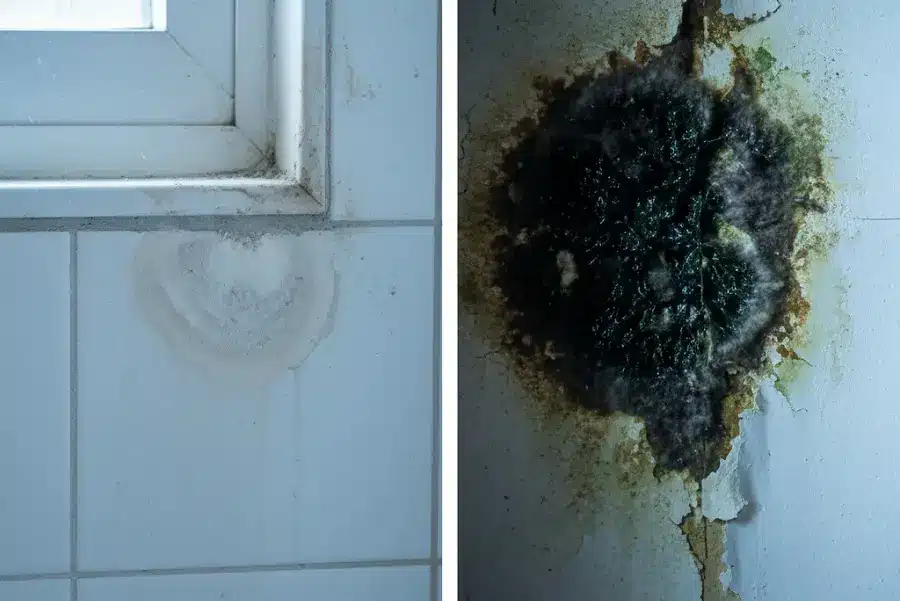
- Mildew: Usually grows in a flat pattern and remains on the surface of a material. It often starts as a white or gray powdery substance and may eventually turn yellow or brown. You most commonly find it on bathroom grout, shower curtains, or the leaves of indoor plants.
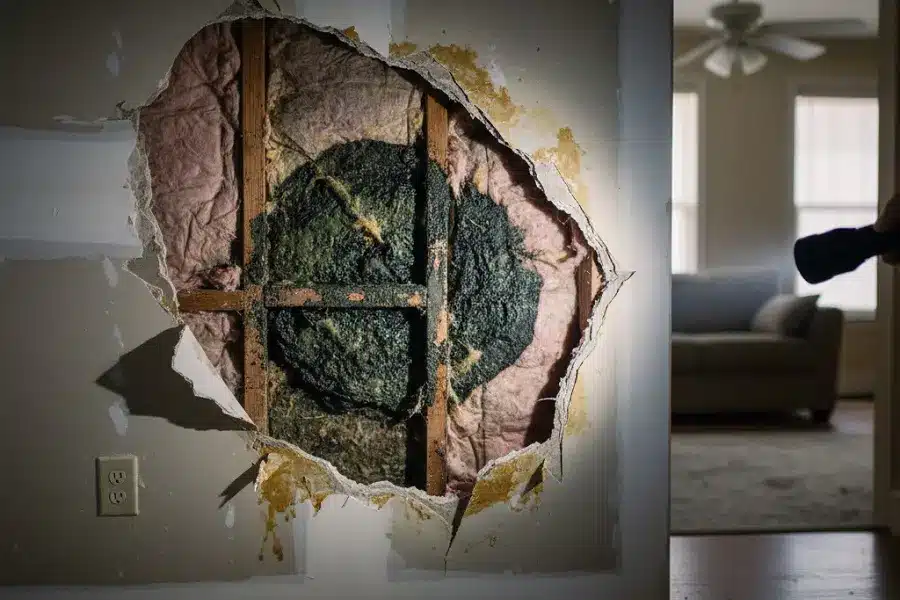
- Mold: This is a much more aggressive fungus. It often appears “fuzzy” or “slimy” and can come in a rainbow of unsettling colors—deep black, forest green, bright orange, or even purple. Unlike mildew, mold has “hyphae” (root-like structures) that penetrate deep into porous materials like drywall, wood, and insulation.
2. Structural Impact
- Mildew: Because it stays on the surface, mildew is generally considered a cosmetic issue. It can be scrubbed away with household cleaners and rarely causes structural failure.
- Mold: Mold is a decomposer. Its job in nature is to break down organic matter, and it doesn’t know the difference between a fallen log in Forest Park and the wooden studs in your walls. If left untreated, mold will literally eat through your home’s structure, leading to warped floors and weakened support beams.
3. Health Risks
- Mildew: While mildew can trigger minor sneezing or localized skin irritation, it is generally not associated with long-term respiratory illness.
- Mold: Certain types of mold, particularly Stachybotrys chartarum (Black Mold), produce mycotoxins. These can lead to “Sick Building Syndrome,” causing chronic headaches, extreme fatigue, asthma flare-ups, and even neurological issues in sensitive individuals, children, or the elderly.
Why Portland is a “Mold Hotspot”
The Pacific Northwest provides the “Perfect Storm” for mold. Our homes are built to be airtight to keep out the cold, but this often traps humid air inside. When that warm, moist air hits a cold exterior wall, it creates condensation. In a city like Portland, where outdoor humidity rarely drops below 60% in the winter, that condensation provides the perfect “watering hole” for mold spores to bloom.
Q&A: Fungal Growth in the PNW
Can I just use bleach to kill mold?
This is the most common mistake homeowners make. Bleach is mostly water. When you spray it on mold on a porous surface (like drywall), the chlorine stays on the surface while the water soaks into the wall, actually “feeding” the mold roots and causing it to grow back even faster a week later. Professional antimicrobial agents are required to kill mold at the root.
How do I know if the mold in my house is the "Toxic Black" kind?
You cannot tell by looking. Many molds look black but are relatively harmless, while some white or green molds can produce dangerous toxins. The only way to know for sure is through professional mold testing and lab analysis. We coordinate with third-party labs to ensure unbiased, accurate results for our Portland clients.
Does a musty smell always mean there is mold?
Yes. That “earthy” or “old sock” smell is caused by Microbial Volatile Organic Compounds (MVOCs). If you smell it, the fungus is actively growing and releasing gases. Even if you can’t see it, it is likely hidden behind a wall, under a carpet, or in your HVAC ductwork.
Will a dehumidifier stop mold from growing?
It can prevent new mold from starting by keeping the air dry (ideally below 50% humidity), but a dehumidifier will not kill mold that is already established. Once mold has a food source (drywall) and has already bloomed, it must be physically removed through professional remediation.
Why does mold keep coming back in my bathroom?
This usually indicates a ventilation issue. If your exhaust fan isn’t powerful enough or if you aren’t running it for at least 20 minutes after a shower, the steam saturates the drywall. In Portland, we often recommend upgrading to a higher-CFM fan with a humidity sensor to automatically manage moisture.
Conclusion: Take the Fresh Start Approach
Whether you are dealing with a small patch of mildew or a suspicious dark stain in your crawlspace, don’t ignore it. In the Pacific Northwest, mold issues only get worse with time. At 911 Restoration of Portland, we specialize in professional mold remediation that doesn’t just “clean” the surface—we eliminate the source.
Breathe easier in your own home. If you suspect mold growth, call 911 Restoration of Portland today at
(503) 308-7906 for a Free Visual Inspection for property owners. We’ll help you clear the air and get a Fresh Start.