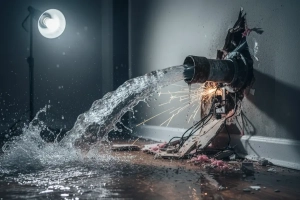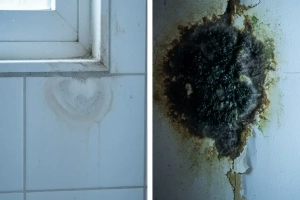
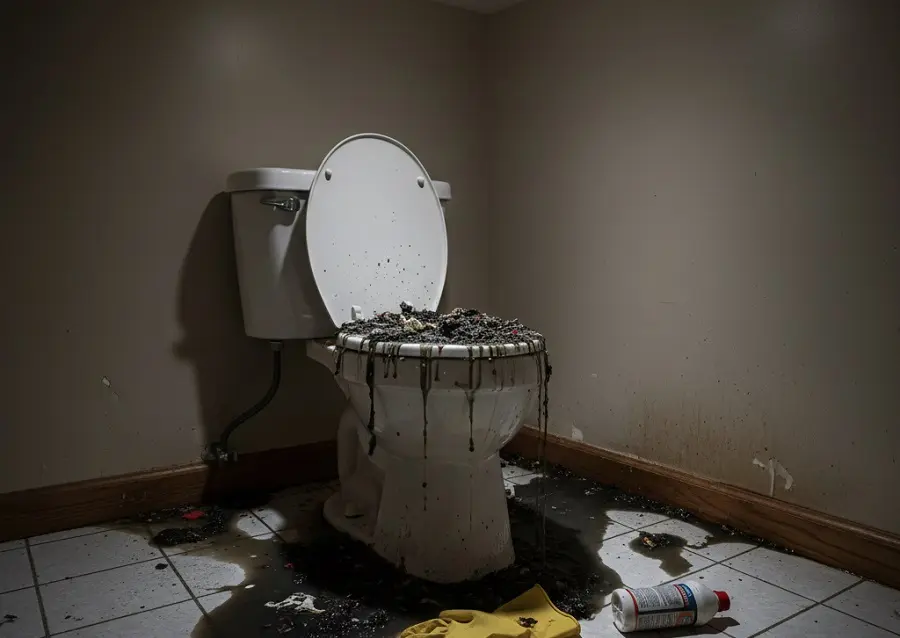
A sewage backup is arguably the most distressing and dangerous type of property damage a homeowner can experience. Whether it’s a toilet overflow, a septic tank failure, or a municipal sewer line backup caused by Portland’s heavy winter storms, the result is a “Category 3” water intrusion—also known as “Black Water.”
In the Pacific Northwest, our aging infrastructure and heavy rainfall often put a strain on sewer systems. When a backup occurs, it isn’t just “dirty water” entering your home; it is a complex mixture of human waste, industrial chemicals, and a cocktail of dangerous pathogens. At 911 Restoration of Portland, we treat every sewage call as a biohazard emergency. Understanding why you should never attempt a DIY cleanup for sewage is critical for your family’s safety.
The Three Categories of Water Damage
To understand the danger of sewage, you must understand how the restoration industry classifies water:
- Category 1 (White Water): This is clean water from a broken supply line or a leaking faucet. It is generally safe to handle but can degrade over time.
- Category 2 (Gray Water): This is slightly contaminated water, such as discharge from a dishwasher, washing machine, or a toilet with only urine. It can cause sickness if consumed.
- Category 3 (Black Water): This is highly contaminated water. This includes sewage, rising floodwaters from rivers, and stagnant water that has supported microbial growth. Black water is extremely dangerous to touch or inhale.
Why Sewage Cleanup Requires a Professional Touch
- Pathogens and Biohazards: Sewage contains a terrifying list of bacteria, viruses, and parasites. These include E. coli, Salmonella, Hepatitis A, and Giardia. These pathogens can enter the body through skin contact, accidental ingestion, or even by inhaling the microscopic droplets that enter the air during a backup. Household bleach is often not enough to neutralize these microscopic threats, especially in porous materials like wood or drywall.
- The “Total Loss” Rule: When Category 3 water hits porous materials like carpets, rugs, upholstered furniture, or drywall, they cannot simply be “cleaned.” They must be removed and safely disposed of. Many homeowners try to save a favorite rug after a sewage backup, but the bacteria can live deep within the fibers for months, posing a long-term health risk.
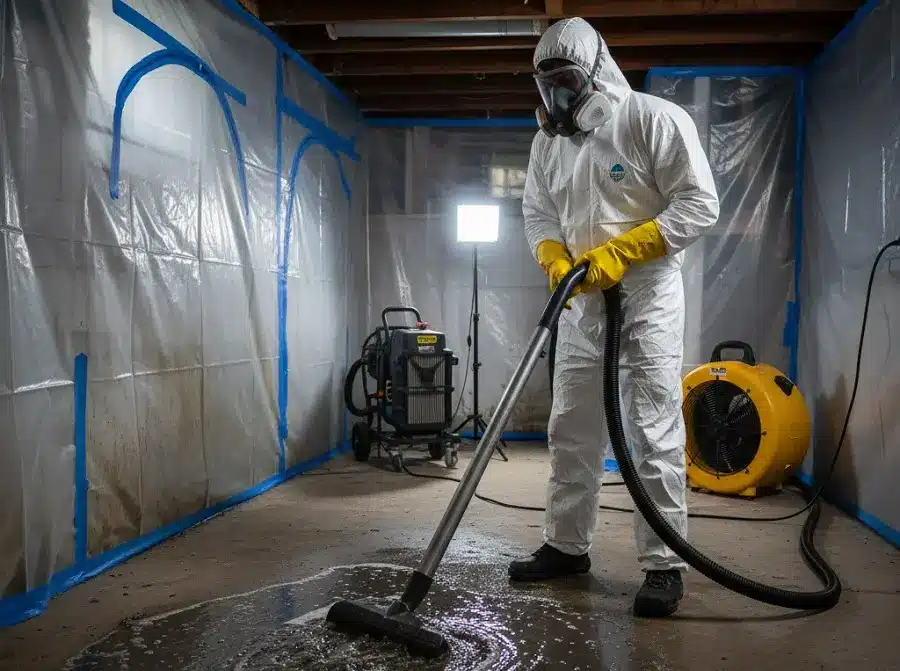
- Cross-Contamination Risks: If you walk through sewage and then walk into your kitchen or bedroom, you have just spread biohazards throughout your entire home. Professionals use strict “containment” protocols, including plastic barriers and negative air pressure, to ensure that no contaminated air or particles move from the affected area to the rest of the house.
- Specialized Air Scrubbing: Sewage has a powerful, nauseating odor caused by the release of gases like hydrogen sulfide. We use industrial “Air Scrubbers” with HEPA and charcoal filters to remove these odors and capture airborne pathogens. A standard house fan will only spread the contaminated air around.
Q&A: Sewage Emergencies
Can I use bleach to clean up a small sewage spill?
While bleach kills some bacteria, it does not penetrate porous surfaces effectively, and it can react with the chemicals in sewage to create toxic fumes. Furthermore, bleach does not address the parasites (like Cryptosporidium) that are resistant to chlorine. Professional-grade antimicrobial agents are required for true sanitization.
Why do sewer backups happen so often in Portland?
Portland has a “Combined Sewer System” (CSS) in many older neighborhoods. This means the same pipes carry both sewage and rainwater. During heavy Pacific Northwest storms, the volume of rainwater can overwhelm the pipes, causing the mixture to back up through the lowest point in a home—usually the basement floor drain or a downstairs toilet.
My neighbor's tree roots caused my sewer to back up. Am I still responsible?
Typically, yes. Property owners are responsible for the “lateral” line that connects their home to the city’s main sewer line, regardless of whose tree caused the damage. However, we can help you document the cause of the backup to see if your insurance policy covers “Sewer and Drain Backup,” which is often an optional “rider” on Oregon policies.
Is it safe to stay in my house during the cleanup?
If the backup is contained to a single basement room with its own ventilation, you may be able to stay. However, if the backup happened in a main living area or if the HVAC system was running during the event, we usually recommend vacating until the air has been scrubbed and the area has been cleared by a professional.
How do you handle the smell?
We use Ozone Generators or Hydroxyl Generators after the source of the sewage has been removed and the area has been sanitized. these machines break down the odor-causing molecules at a molecular level, rather than just “masking” them with perfumes.
Conclusion: Safety First, Restoration Second
A sewage backup is a health crisis disguised as a plumbing problem. At 911 Restoration of Portland, our IICRC-certified technicians have the training and the protective gear (PPE) necessary to handle biohazards safely. We provide a Fresh Start by ensuring that when we leave, your home is not just “clean” to the eye, but scientifically sanitized and safe for your children and pets.
If you are facing a sewage backup, do not touch it. Call 911 Restoration of Portland immediately at 503-308-7906. We arrive in 45 minutes to take the danger out of your home.