While Portland is generally known for its mild, rainy winters, residents know all too well that sudden, severe ice storms and deep freezes can strike the Pacific Northwest. When temperatures plummet below freezing for consecutive days, homeowners face one of the most destructive and expensive winter emergencies imaginable: burst pipes.
A single burst pipe can unleash hundreds of gallons of water into your home within hours, destroying drywall, flooding basements, and ruining valuable belongings. Understanding why pipes burst and taking proactive steps to protect your plumbing can save you from a massive disaster. In this guide, we will detail how to winterize your Portland home and what to do if you find yourself facing a frozen or burst pipe.
The Science Behind Burst Pipes
It’s a common misconception that ice expanding outward directly breaks the pipe. In reality, the process is slightly more complex. When water freezes inside a pipe, it expands. This expansion creates a blockage of ice. As the freezing continues, the ice expands toward the closed faucet, dramatically increasing the water pressure in the remaining unfrozen section of the pipe. It is this intense buildup of hydraulic pressure—not the ice itself—that eventually causes the pipe walls to rupture.
Pipes located in unheated interior spaces, such as basements, attics, and garages, are highly vulnerable. Similarly, pipes that run through uninsulated exterior walls are at a significant risk during a Portland freeze.
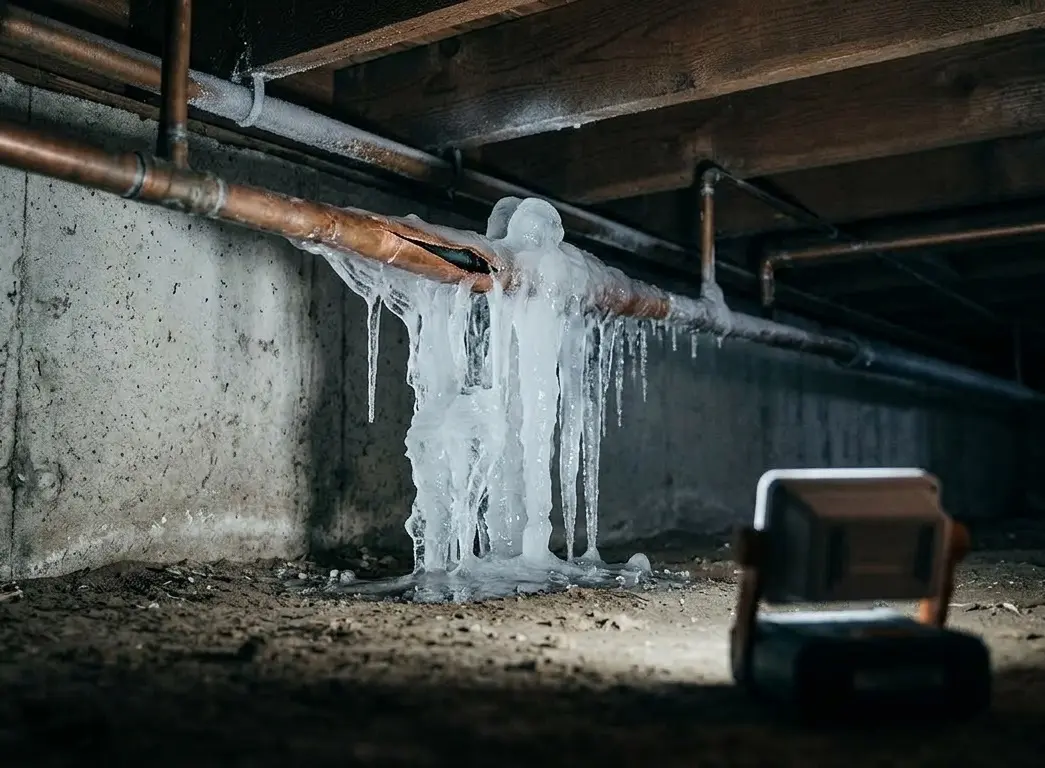
Why Pipes Burst When Water Freezes
Water expands by about nine percent when it freezes. Inside a pipe, that expansion creates pressure that has nowhere to go. The ice itself rarely splits the pipe at the ice plug. Instead, the pressure builds downstream and ruptures the line somewhere between the ice and a closed faucet. The split is often a small slit only a few inches long, but when the ice thaws, water pours through it at full household pressure.
Materials make a difference. Copper supply lines burst readily under freeze pressure. PEX is more elastic and survives some freezing events that would split copper, but the fittings can still fail. Galvanized steel cracks at threaded joints. All three materials are vulnerable when sustained freezing conditions occur.
Which Pipes Are Most at Risk
- Pipes in exterior walls, especially on the north side of the house and in poorly insulated walls.
- Pipes running through unheated crawlspaces, attics, and garages.
- Pipes serving exterior hose bibs and outdoor kitchens.
- Pipes in vacation properties and second homes where the heat is not maintained.
- Pipes running through mechanical rooms that share an exterior wall.
- Fire sprinkler lines in unheated commercial buildings (a common source of major commercial losses in Portland freeze events).
Pre-Winter Preventative Measures
The best way to handle a burst pipe is to ensure it never happens in the first place. Before the winter frost sets in, take these crucial steps to winterize your home:
- Insulate Vulnerable Pipes: Take a tour of your home’s unheated areas—the attic, basement, crawlspace, and garage. Any exposed water supply lines should be wrapped in high-quality pipe insulation (foam tubes or fiberglass tape). Pay special attention to the pipes closest to the exterior walls.
- Seal Leaks and Drafts: Cold air drafts dramatically increase the risk of freezing. Inspect the perimeter of your home and use caulk or expanding foam to seal cracks and holes near where pipes enter the house. Ensure your crawlspace vents are properly closed or insulated during extreme cold snaps.
- Disconnect Exterior Hoses: This is a simple but critical step. Disconnect all garden hoses from outdoor spigots before the first freeze. If a hose is left attached, water cannot drain properly from the spigot, allowing it to freeze and burst the fixture, which often causes a leak inside the exterior wall.
- Locate Your Main Water Shut-Off Valve: In a plumbing emergency, you need to know exactly where to turn off the water to your home. Locate your main shut-off valve, ensure it is in good working order, and make sure everyone in the household knows how to operate it.
What to Do During a Freeze
When the local meteorologists predict a severe ice storm or a prolonged freeze in the Portland area, implement these active defense strategies:
- Keep a Trickle of Water Flowing: Open your faucets slightly to allow a slow, steady drip of water. Moving water is far less likely to freeze, and even if ice does begin to form, the open faucet relieves the dangerous buildup of pressure inside the pipe, preventing a rupture. Focus on faucets served by exposed pipes or those located on exterior walls.
- Open Cabinet Doors: In your kitchen and bathrooms, open the cabinet doors beneath the sinks. This allows the warm air from your home’s heating system to circulate around the uninsulated plumbing underneath. (Be sure to move any hazardous household chemicals out of reach if you have small children or pets).
- Maintain Consistent Thermostat Settings: Keep your thermostat set to the same temperature during both the day and night. While you might normally turn the heat down while sleeping to save energy, maintaining a consistent, warm temperature during a severe cold snap is essential to protect your pipes. If you plan to leave town, never set your thermostat lower than 55°F (13°C).
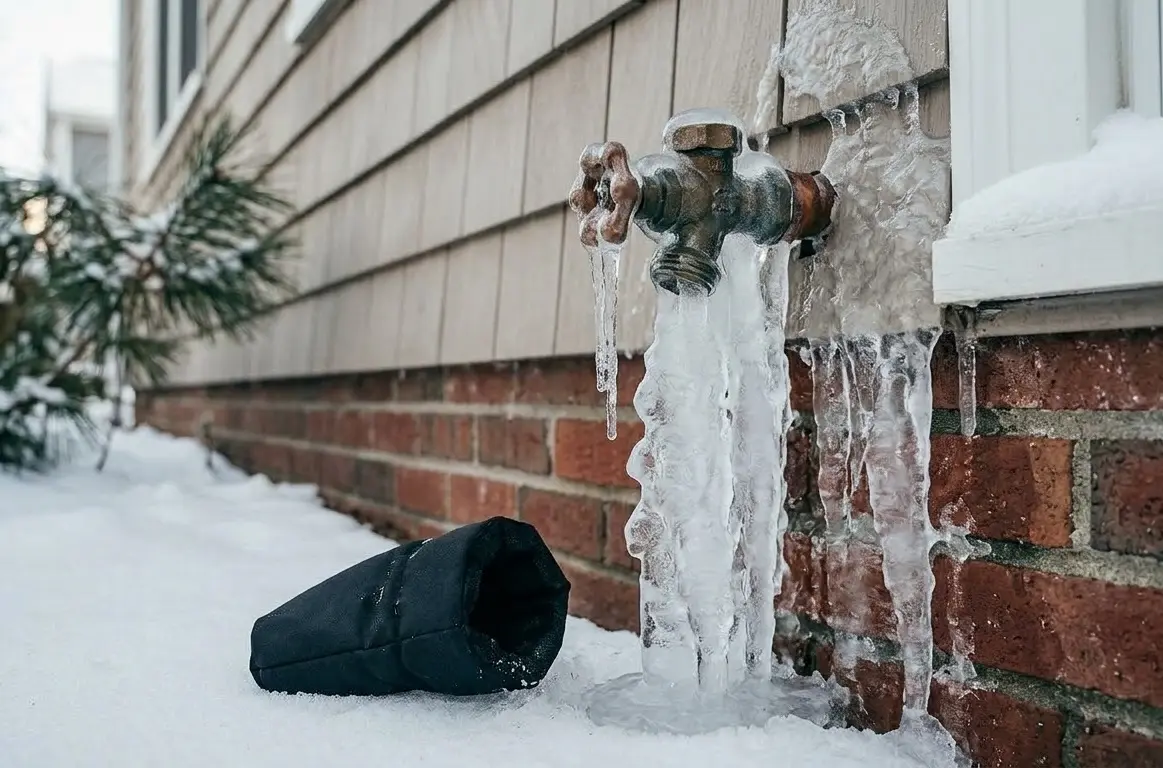
How to Handle a Frozen or Burst Pipe
If you turn on a faucet and only a few drops come out, you likely have a frozen pipe.
- Thawing a Frozen Pipe: Keep the faucet open. As you treat the frozen pipe and the ice plug begins to melt, water will flow through and help melt more ice. Apply heat to the section of pipe using an electric heating pad, a hair dryer, or a portable space heater. Never use a blowtorch or open flame, as this poses a severe fire risk and can melt modern PEX piping. Apply heat until full water pressure is restored.
- Managing a Burst Pipe: If the pipe has already ruptured, immediate action is required. Shut off the main water valve immediately to stop the flow of water. Turn off the electricity to the affected area to prevent electric shock.
- Call 911 Restoration of Portland: Once the water is shut off, contact our emergency restoration team. Water from a burst pipe spreads rapidly, soaking into floors, walls, and insulation. We guarantee a 45-minute response time to begin professional water extraction and structural drying. Our experts will thoroughly dry your property to prevent secondary damage like wood rot and mold, giving your home a Fresh Start after a winter disaster.
When to Call Us
If a frozen pipe has already burst and water is in the home, call us right after you shut off the main supply. We dispatch around the clock during freeze events and target a 45-minute arrival across the Portland metro. Acting in the first hour minimizes the affected area and reduces the chance of mold growth in walls and floors. The faster the structural drying begins, the smaller the repair scope ends up.
Frequently Asked Questions
At what temperature do pipes start to freeze?
Uninsulated pipes in exposed locations can begin to freeze when temperatures drop below 20 degrees Fahrenheit for several hours. Insulated pipes in better-protected locations can survive sustained temperatures in the teens. The combination of temperature and wind chill matters more than the headline forecast.
Does running every faucet help?
Letting a cold-water faucet drip on the most vulnerable line is helpful. Running every faucet at once is not necessary and wastes water. Focus on the lines you have identified as highest risk.
My pipes froze but did not burst. Are they damaged?
Possibly. Even when a freeze does not produce a visible burst, internal stress can weaken pipe walls and fittings, which then fail weeks or months later. Monitor for slow leaks for the next several weeks after a freeze event.
Are pipe heating cables a good idea?
Pipe heating cables, sometimes called heat tape, work well on specific high-risk sections of pipe such as crawlspace runs, RV hookups, and exterior wall lines. Buy a UL-listed product, follow the manufacturer instructions for installation length and overlap, and replace cables every few years.
Will my homeowners insurance cover frozen pipe damage?
Most policies cover sudden frozen pipe damage when the home was occupied and heated. Coverage often depends on whether you took reasonable preventive steps. Document what you did, including thermostat settings and any travel dates, so the claim is supported.