Kitchen/Bathroom Mold Remediation
Home » Mold Remediation » Kitchen/Bathroom Mold Remediation

Kitchen/Bathroom Mold Remediation in Portland, OR
Kitchens and bathrooms are high-risk areas for mold in any Portland home due to high heat, high steam, and hidden plumbing leaks behind fixtures, cabinets, and tiling. Mold often proliferates in the small, tight, and inaccessible spaces under sinks, around showers, and within wall cavities adjacent to wet walls. This localized mold is not only unsightly but poses a health risk in high-use areas and requires precise demolition and repair.
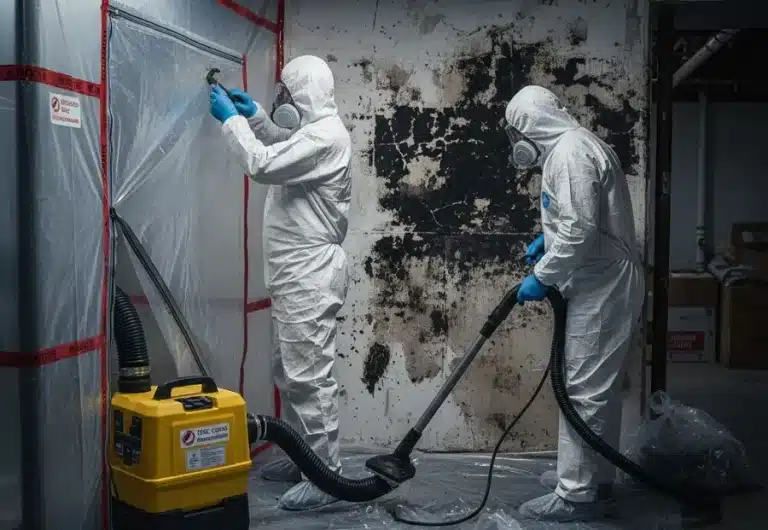
Our Kitchen/Bathroom Mold Remediation service specializes in isolating and removing mold from these complex, finished spaces. We meticulously open and remove mold-contaminated drywall and materials with minimal impact on surrounding cabinetry and tile. We then clean and treat the exposed wall studs and subflooring, apply a permanent fungicidal coating, and recommend necessary repairs like new ventilation fans and waterproofing measures to prevent the moisture from returning to these critical areas.




REVIEWS

 Dorianna Phillips
Trustindex verifies that the original source of the review is Google.
I cannot recommend 911 Restoration highly enough. When my basement flooded, their team was at my home within hours and immediately took action to address the damage. My rep, Richard Brown, was exceptional. He is clearly experienced and knowledgeable, but what stood out even more was his empathy and calm approach. I was panicked, and he took the time to walk me through every step of the process, laying out the issues and solutions clearly. He even spoke directly with my insurance agent, which made the entire process much easier for me. Richard’s team, including George and Melvin, were equally outstanding. They were professional, kind, and thorough. Every person I interacted with from 911 Restoration demonstrated the same level of care and professionalism. They turned what could have been a nightmare into a manageable experience, and I walked away with total confidence in their work. If you are facing water damage or any restoration issue, 911 Restoration is the company you want by your side. They are responsive, compassionate, and true experts in what they do. Jennifer OrtizWe can't thank the entire crew and staff for their concern and service. The job definitely started with finding out why our floor was warping and where the water was coming from. The reassurance that they would take care of contacting contractors to handle the plumbing that needed to be dealt with, the flooring and cabinetry that needed to be replaced was such a relief for us. First though they had a lot of work to deal with under our house before they could even start inside - hot water breaks cause so much immediate damage. These guys worked so hard and continuously getting all the insulation under one side of our house removed so they could expose the pipes and find what needed to be done before the plumber got here. The multiple days of drying, and finding they needed more fans were needed to get this dried out. They always had such a great and caring attitude, took great care in keeping our house as closed off from the mold exposure as possible. Since we have a number of pets we didn't want them to be boarded so we chose to stay here while they worked. They never once let on this was more inconvenient for them than not. They understood the stress both animals and humans were having here. Not that I ever want to go through this again, but if I had to we would call 911 first. You folks are awesome from day 1 to the finish.
 Taylor BeggOur sewage line backed up TWICE and turned into a total nightmare. We were really nervous because after getting quotes and schedules from 3 other companies, we were losing hope that nobody would be able to help us. These people absolutely nailed it!!! Fair pricing, exceptional level of detail to their work, and they were so polite and courteous around our home. Richard who came and gave us a quote was kind and professional, and his crew that did the cleaning, Alex and another man with a script tattooed on his arm, were literally so nice we were raving about them after they left. Most polite and respectful workers we’ve ever had in our home and we would have them back in a heartbeat. THANK YOU!!
 Nicolas MaximWe had a recent water leak from our second floor down into our first floor and into the crawl space! Rich did an amazing job telling me what I could expect during the mitigation phase (cost, visits, materials, and equipment needed). Mel, Scott and the team did an amazing job daily coming to set up equipment for drying the damaged areas and ensuring that things were progressing. Very friendly, courteous, and professional. Would highly recommend if you’ve had a leak and are in need of mitigation.
 Bella DvirWe received quick response and service. they worked with our insurance company. Very satisfied.
 Chris Herrin911 restoration of Portland turned an extremely negative situation into one where I felt empowered to make informed decisions. Aurelius showed up with an hours of my phone call and I felt like a high priority. They worked with me to address my needs and my concerns. I would highly recommend you consider using them if you find yourself in a similar situation. They understood my financial limitations and worked with me to find a solution that worked within those constraints, without making me feel pressured to take on more than I could afford. Not only was their team in the field, upbeat and friendly, but the owner Moe reached out to me personally to see if he couldn’t make it even better. I very much appreciate their approach and their prompt response.
 Lyndsay MaderisI can’t recommend 911 Restoration enough! After my salon flood, they showed up incredibly fast and handled every step of the remediation process with total professionalism. As a woman, I don’t always have the best experiences with contractors, but their team made me feel completely comfortable and earned my trust from day one. The entire process was smooth, stress-free, and handled with great care. I’m beyond grateful for their help—highly recommend!
 Rosalie WakefieldIn our home, the washing machine and dryer are in the center of the house. Imagine my surprise when I looked up from the computer and saw a flood of water working its way toward me. I contacted 911 Restoration and they came right out with several de-humidifiers and heater/dryers, put them everywhere, even in the crawl space, and let them do their thing for a few days until everything was dried out nicely. They had to take a lot of the carpet out, too. Then they called Portland Construction Solutions to come and do all of the hammerin' and nailin', install new carpet, everything back to normal, even fixed the drain where the hose had popped out. I was SO impressed with how they kept in close touch with me, explained the process. I definitely recommend both businesses for any one who might have a similar problem. Excellent job - nice people!
 Tricia JenkinsI’ve owned homes since 1989 and had never filed a claim or had a disaster of any kind. When I woke on one Sunday morning, to find I had a water leak that went from the top floor to the bottom floor, on through to the crawl space , I had no idea who to call or what to do. I was panicked!! Not only did 911 Restorations on call team, call me back immediately, they sent Richard out to save the day and my house from further damages. Their team began water extraction, carpet and lower wall removal, a ceiling opened up, and had dehumidifiers and fans going within a day. There was no way mold was setting in with their fast response and action. Not only did they get into action, they walked and talked me through step my step exactly the process that I could expect and what they said was exactly what took place. It was so reassuring to know they were knowledgeable and I could trust them in a situation I didn’t know anything about. In addition to the mitigation, they scheduled my move out so I could begin my restoration process with ease. Moe and the billing office were so patient with me when I had some issues with an insurance mixup causing a delay in payment. Thank you 911 for your professionalism, your compassion in a panicked situation, your knowledge so I could stay calm, knowing you had this covered, and your extreme patience!! I hope no one has a disaster, but if they do, I’m recommending you without a doubt.
 William Kiefel911 Restoration was fast, accurate, on time and very customer service oriented. Every employee was great to work with. 911 worked well with my insurance company too. Highly recommend these guys.
Our 3-Step Kitchen/Bathroom Mold Remediation Process
Localized Containment and Fixture Protection
We seal off the affected kitchen/bathroom and protect surrounding fixtures (cabinets, tub, vanity). We open the wall cavities and safely remove all contaminated drywall and base materials with precision.
Targeted Structural Cleaning and Treatment
The exposed framing, subfloor, and concrete/block are meticulously cleaned, HEPA vacuumed, and treated with an EPA-registered fungicidal agent. We also clean the backs of any non-salvageable structural materials.
Moisture Source Correction and Rebuild Preparation
We verify the plumbing or leak source is corrected and dry. We then ensure the space is fully ready for the rebuild (new drywall, insulation, fixtures) and often recommend new, properly vented exhaust fans to reduce future humidity.
Q&A
If I see mold on my shower grout or caulk, can I simply re-caulk over it?
No. Visible mold on caulk or grout means the mold roots have penetrated into the material. Simply cleaning and re-caulking over it will trap the existing mold, allowing it to continue growing beneath the new sealant. The contaminated caulk, grout, or sealant must be completely removed, the surface underneath treated, and then new material applied.
Does your service include checking for hidden mold behind bathroom tiles and shower walls?
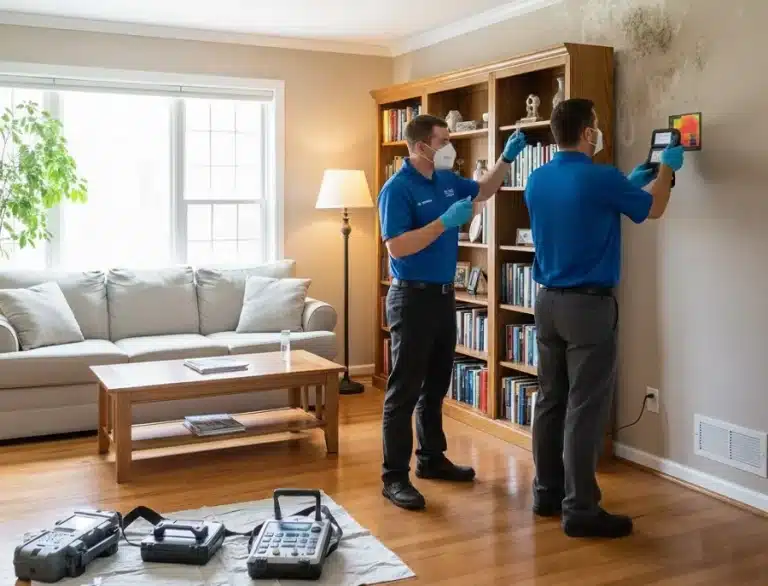
Yes. If mold growth on the ceiling or walls is significant, or if we detect persistent elevated moisture readings near the shower or tub, we will conduct a limited, non-destructive check. Often, removing a section of ceiling or baseboard is necessary to confirm if a hidden leak behind the tile or shower surround is the source of the chronic mold problem.
Will the mold remediation process damage my expensive cabinets or vanity?
We use extreme precision during localized remediation. We protect all surrounding finished surfaces with plastic sheeting and often remove only the minimum amount of drywall or substrate necessary to access the mold, typically near the floor or ceiling line. We work carefully to minimize demolition and preserve costly fixtures like cabinets.
What is the most common cause of hidden mold behind kitchen cabinets?
The most common causes are slow, hidden leaks from the kitchen sink plumbing, the refrigerator ice maker line, or the dishwasher drain line. These leaks are often tiny and go unnoticed for long periods, allowing water to wick into the base cabinets and drywall behind them, creating a large hidden mold colony.
Do you recommend any specific preventative steps for high-humidity areas like bathrooms?
Yes. Prevention involves reducing moisture. We strongly recommend installing a high-capacity exhaust fan and ensuring it is properly vented to the exterior (not just the attic) and used during and after showering. Applying mold-resistant primer and paint to walls and ceilings is another important protective measure after remediation is complete.