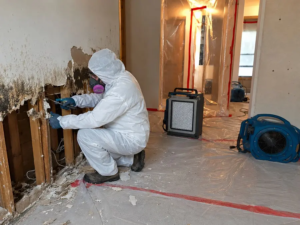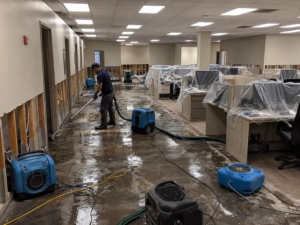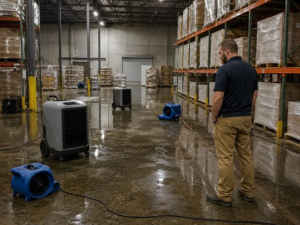
Water damage in a commercial property is not just a maintenance problem. It can affect tenants, employees, customers, inventory, equipment, lease obligations, safety, and business continuity. For Portland property managers, a clear response plan can reduce confusion and help the restoration process move faster.
Use this checklist as a practical guide when a commercial leak, flood, roof failure, pipe break, or appliance malfunction affects a building.
1. Confirm safety first
Before focusing on cleanup, confirm whether the affected area is safe. Standing water near electrical panels, outlets, extension cords, elevators, commercial kitchen equipment, or machinery can be dangerous. If water may contain sewage or chemicals, keep staff and tenants away from the area.
Post temporary warnings, limit access, and document the area before changes are made. Safety decisions should be made quickly and clearly.
2. Stop the source or stabilize the building
The next step is source control. That may involve shutting off a water line, calling a plumber, turning off an appliance, tarping a roof, or closing an area of the building. If the leak source is unknown, note where water is visible and whether it appears to be spreading.
Commercial properties often have multiple water systems and access points. Make sure your team knows where shutoffs are located before an emergency happens.
3. Notify key people
A property manager may need to contact the building owner, tenant representatives, maintenance staff, restoration company, plumber, insurance contact, security team, and affected vendors. Keep the first message short and factual:
- What happened.
- Where the water is located.
- Whether the source is stopped.
- Whether the area is closed or restricted.
- Who has been called.
- When the next update will be shared.
Clear communication helps reduce repeated calls and keeps everyone aligned.
4. Document before cleanup begins
Take photos and videos of the source, standing water, affected rooms, ceiling stains, wet flooring, damaged contents, inventory, equipment, and any safety concerns. Record the time the loss was discovered and the actions taken.
For commercial claims, documentation can be especially important because the loss may involve multiple tenants, business interruption concerns, and shared building systems.
5. Call a commercial restoration team
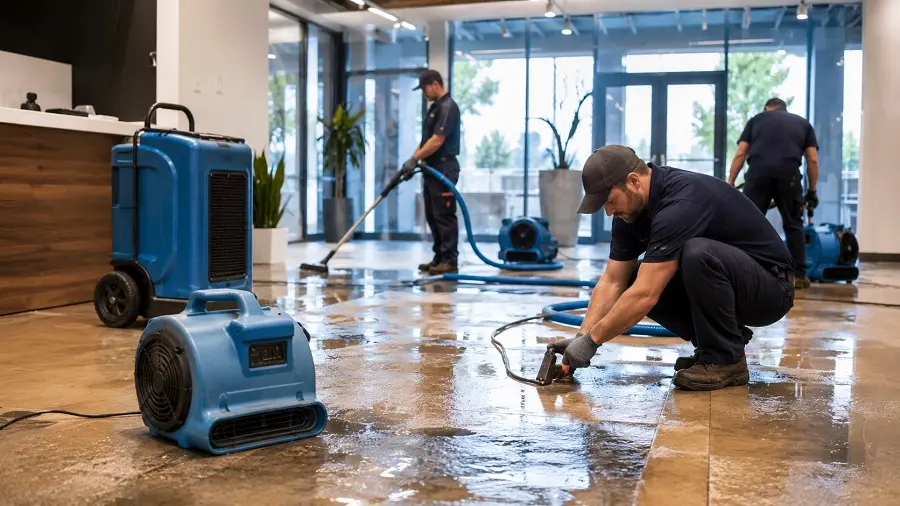
Commercial water damage requires more than a mop and a fan. A restoration team should inspect affected materials, extract water, set up drying equipment, monitor moisture, and help determine what can remain open and what should be isolated.
Ask whether the team can support after-hours response, multiple affected suites, moisture documentation, and work around tenant operations when possible.
6. Protect unaffected areas
Water damage can spread through hallways, under walls, into neighboring units, and down through ceilings. Protect unaffected areas by controlling foot traffic, isolating the wet zone, relocating contents, and preventing employees or tenants from walking through water and tracking it elsewhere.
In some buildings, containment may be needed to separate work areas from active business areas.
7. Decide whether the business can stay open
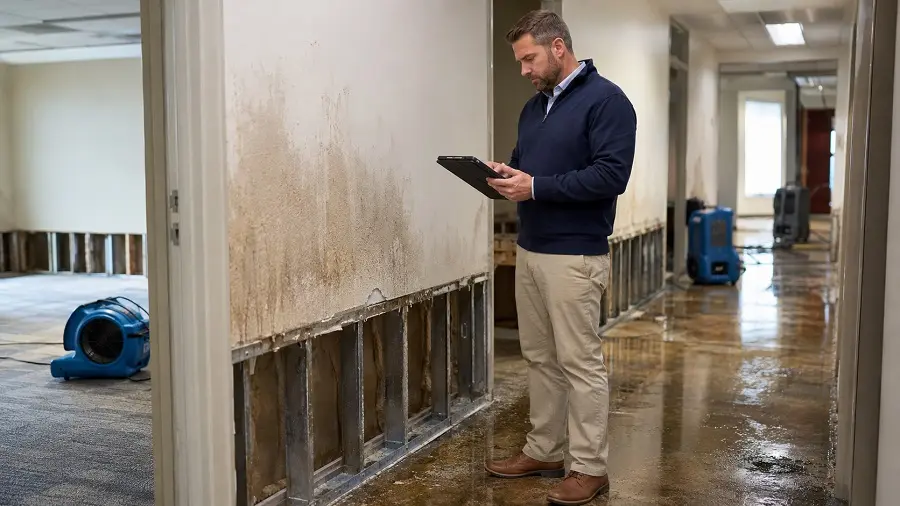
Some commercial properties can operate partially during restoration. Others need temporary closure or relocation. This decision depends on safety, water category, electrical risk, odors, noise, equipment placement, and customer access.
A restoration plan should consider operations. For example, drying equipment may be placed to preserve access routes, work may be phased by area, and after-hours work may reduce downtime.
8. Track equipment and progress
Ask for drying updates and moisture readings. Keep a log of equipment placement, rooms affected, daily changes, and any tenant concerns. This helps management understand the timeline and gives insurance contacts a clearer picture of the work performed.
9. Plan repairs and reopening
After drying, the building may need drywall repair, flooring replacement, paint, ceiling tile replacement, trim repair, odor control, or cleaning. Coordinate repairs with tenants so reopening is organized and communication is clear.
Call 911 Restoration of Portland for commercial water damage
911 Restoration of Portland provides commercial water extraction, structural drying, and water damage restoration for offices, retail spaces, restaurants, warehouses, and managed properties. For 24/7 help, call (503) 208-9780.
FAQ
What should property managers do first after commercial water damage?
Confirm safety, stop the source if possible, restrict access, document the damage, and call the needed plumber and restoration professionals.
Can tenants stay open during restoration?
Sometimes. It depends on safety, contamination, access, equipment placement, and the scope of damage. A phased restoration plan may help reduce downtime.
Why is moisture documentation important?
Moisture documentation helps show what areas were affected, how drying progressed, and when materials were ready for repairs.