A restaurant water damage emergency is stressful because the building, equipment, staff, customers, food inventory, and revenue are all affected at once. A supply line can fail behind a commercial appliance. A dishwasher or ice machine can leak overnight. A toilet overflow can contaminate a dining area. A roof leak can drip into a kitchen, storage area, or ceiling cavity.
For Portland restaurant owners and managers, fast water damage cleanup is about more than drying a floor. It is about protecting health, limiting downtime, and reopening with confidence.
Keep people away from the affected area
The first priority is safety. Wet tile can be slippery, standing water can hide electrical hazards, and contaminated water can create health concerns. Block off the area, move staff and customers away, and avoid walking through water if outlets, cords, appliances, or electrical equipment may be involved.
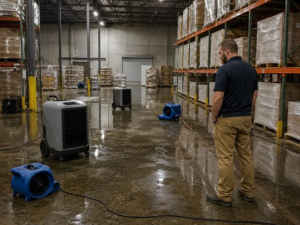
If water may have touched food storage, prep surfaces, or packaging, separate those items for review. Do not assume food or single-use materials are safe just because they look dry.
Stop the source and document the damage
If the leak comes from plumbing or equipment, shut off the closest water valve if it is safe. Take photos and video before cleanup begins. Include the source, affected flooring, baseboards, cabinets, equipment, walls, ceilings, storage areas, and any damaged inventory.
Documentation helps property owners, insurance carriers, landlords, and restoration professionals understand what happened and what areas were affected.
Why restaurants need fast water extraction
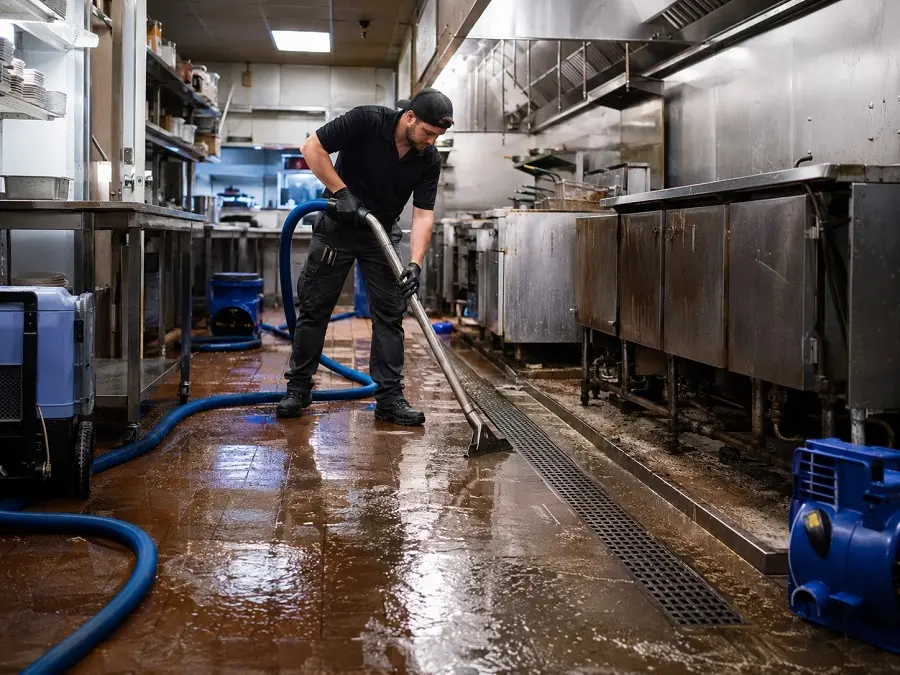
Commercial kitchens often have durable surfaces, but durable does not mean waterproof. Water can travel under tile edges, into wall bases, under rubber mats, beneath equipment, and into storage rooms. Dining areas may include wood, carpet, upholstered seating, and decorative finishes that hold moisture.
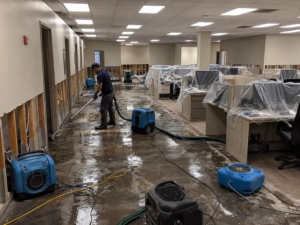
Fast extraction reduces standing water and helps technicians determine where drying is needed. It also helps reduce odors and limits the spread of moisture into unaffected areas.
Watch for hidden moisture under equipment
Restaurant equipment can make inspection difficult. Water may collect under refrigerators, freezers, prep tables, dishwashing areas, bar equipment, soda machines, and storage racks. Moisture can also hide behind stainless panels, wall bases, and built-in cabinetry.
A restoration team should inspect these areas carefully and coordinate equipment movement when needed. Moving heavy equipment without planning can damage floors or disconnect utilities, so it should be handled carefully.
Drying needs to protect operations
Some restaurants may be able to reopen partially while drying continues. Others may need to remain closed until safety, sanitation, and repairs are addressed. The drying plan should consider access routes, noise, heat, humidity control, customer areas, and staff workflow.
Restoration equipment may need to be placed after hours or in sections so the business can move toward reopening as quickly as possible.
Odor and mold prevention
A wet restaurant can develop odors quickly, especially if water reaches food waste areas, porous materials, wall cavities, or floor underlayment. Proper drying and cleaning are essential. If water damage is not addressed fully, musty odors may return after reopening and create customer complaints.
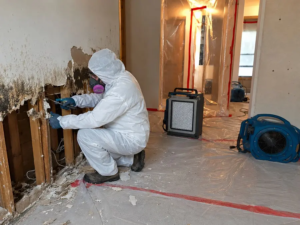
Mold prevention starts with moisture control. That means extracting water, removing materials that cannot be dried, cleaning affected areas, and verifying drying progress.
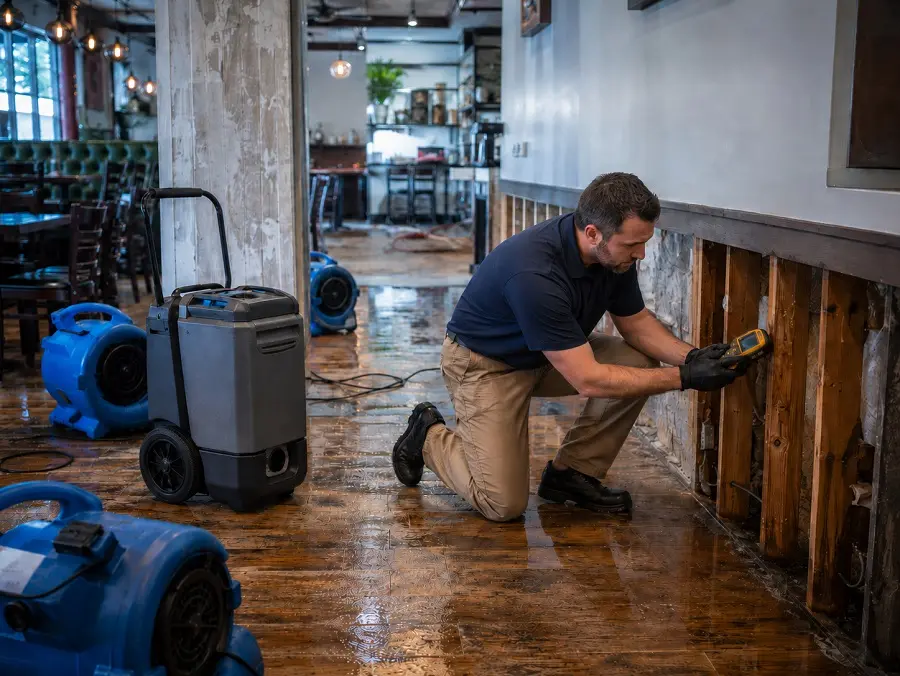
Reopening after restaurant water damage
Before reopening, confirm that wet materials are dry or removed, damaged surfaces are repaired, affected areas are cleaned, and any required health or landlord requirements are addressed. Keep documentation of cleanup, drying, disposal, and repairs.
A clear reopening plan can help reassure staff and reduce confusion when normal operations resume.
Call for commercial restaurant flood cleanup
911 Restoration of Portland helps restaurants with water extraction, drying, cleanup, odor control, and commercial restoration planning. If your restaurant has water damage, call (503) 208-9780 for 24/7 help.
FAQ
Can a restaurant stay open during water damage restoration?
Sometimes, but only if the affected area can be isolated and the remaining space is safe and sanitary. The decision depends on the water source, location, and scope of damage.
What areas are most important to inspect?
Check under equipment, behind wall bases, near floor drains, under mats, around cabinets, and in storage areas. Moisture often hides where it is hard to see.
Should food inventory be thrown away after water damage?
Any food or packaging exposed to water, humidity, or possible contamination should be evaluated carefully. Follow food safety requirements and document disposal when needed.