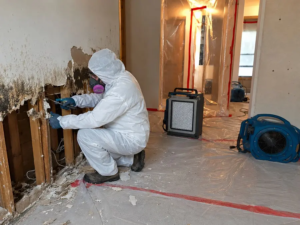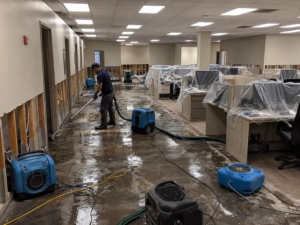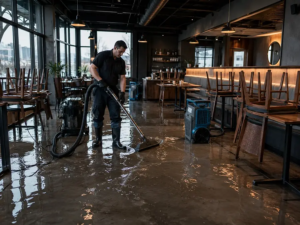
Warehouse water damage can be complicated because the affected area may be large, the contents may be valuable, and the building may need to keep operating during cleanup. Water can enter from roof leaks, loading dock flooding, broken sprinkler lines, plumbing failures, storm damage, or appliance and equipment leaks.
For Portland warehouse owners, managers, and tenants, the restoration plan should focus on water removal, inventory protection, drying, safety, and business continuity.
Start with safety and access control
Standing water in a warehouse can create slip hazards, forklift hazards, electrical concerns, and contamination risks. Restrict the affected area and stop traffic through wet zones. If water is near panels, machinery, charging stations, or electrical equipment, do not allow staff to enter until the risk is evaluated.
Document the affected areas before cleanup begins. Include wide photos of the building and close photos of the source, inventory, racking, floors, walls, and equipment.
Protect inventory and contents
Inventory decisions should happen quickly. Some goods can be moved to a dry area. Others may need inspection, cleaning, disposal, or special handling. Cardboard packaging, pallets, paper goods, textiles, electronics, and food-related materials may be affected differently.
Create a simple tracking system for moved, damaged, and questionable items. This can help with insurance documentation and reduce confusion as cleanup progresses.
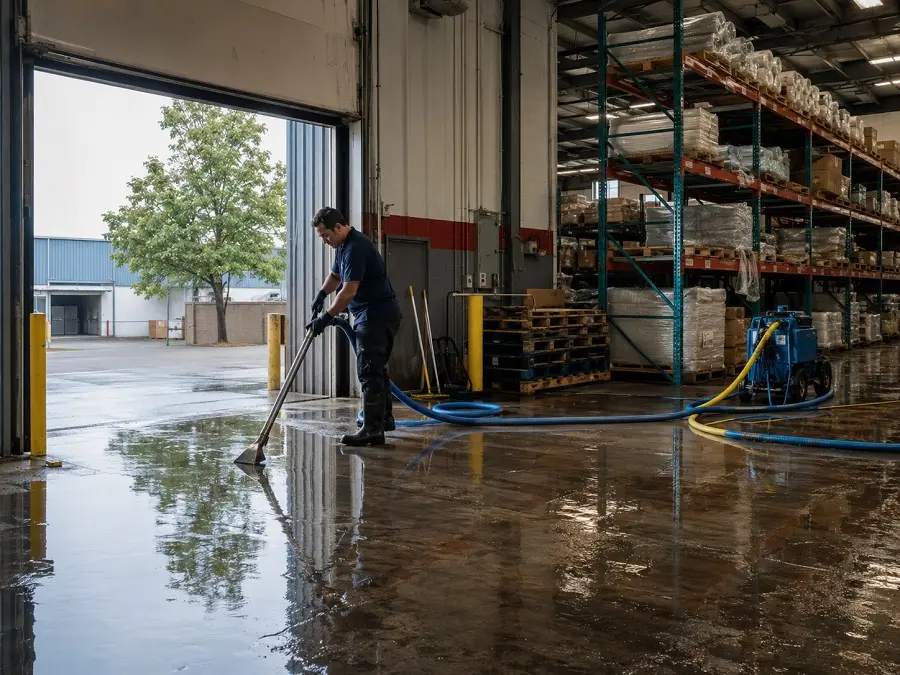
Remove standing water at scale
Warehouse water extraction may require high-volume pumps, commercial extractors, squeegee systems, and coordinated labor. Water can spread across concrete quickly and collect in low areas, expansion joints, trenches, under racks, and around dock doors.
The extraction plan should address both the open floor and the hard-to-reach areas. Leaving water under racks or pallets can extend drying time and create odor or mold concerns.
Dry the structure, not just the floor
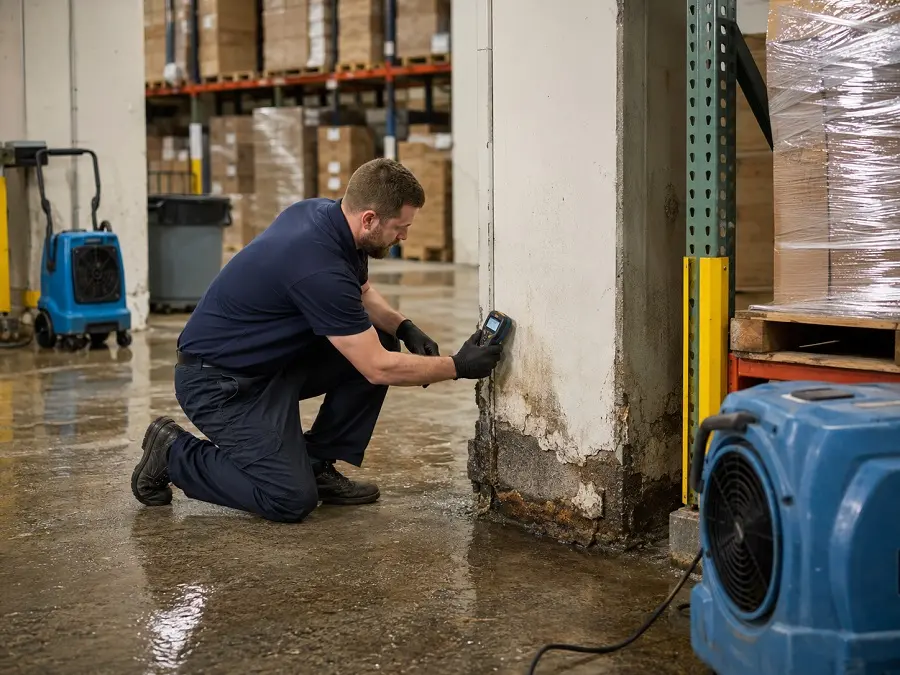
Concrete may look dry on the surface while moisture remains in wall bases, insulation, offices, storage rooms, and materials stacked against walls. If water reached drywall, wood framing, insulation, or finished office space inside the warehouse, those materials need moisture checks.
Commercial structural drying may require industrial dehumidifiers, air movers, containment, and regular readings. The drying setup should consider ceiling height, airflow, temperature, humidity, and whether work areas need to remain active.
Watch roof leaks and sprinkler line failures
Not all warehouse water damage starts at floor level. Roof leaks and sprinkler line failures can wet ceiling insulation, wall cavities, stored products, and electrical systems before water reaches the floor. If the source is above, inspect the path water traveled. Ceiling stains, wet insulation, dripping light fixtures, and damp upper walls can all point to hidden damage.
Temporary roof tarping or plumbing repair may be needed before drying can be effective.
Prevent mold after warehouse water damage
Large buildings can hide moisture in corners, wall bases, and stored materials. Mold prevention requires removing wet porous materials, drying affected areas, controlling humidity, and verifying moisture levels. If inventory is returned to a damp area too soon, the problem can continue.
A post-cleanup walkthrough should confirm that no wet pallets, cardboard, insulation, or wall materials remain in place.
Plan around operations
A good commercial restoration plan should reduce downtime when possible. That may include phased drying, after-hours work, temporary containment, safe pathways, and coordination with supervisors. The building may not need to shut down completely if unaffected areas can remain safe and accessible.
Call for warehouse water damage cleanup
911 Restoration of Portland provides commercial water extraction, drying, and restoration support for warehouses and industrial properties. For emergency help, call (503) 208-9780.
FAQ
Can warehouse water damage be cleaned while operations continue?
In some cases, yes. It depends on safety, contamination, equipment placement, and how much of the building is affected.
Does concrete need drying after water extraction?
Concrete can hold moisture and release it slowly. The surrounding walls, joints, offices, and stored materials should also be inspected.
What should managers document first?
Document the source, affected square footage, inventory, equipment, safety hazards, and emergency actions taken before cleanup begins.