An office leak can start small and become disruptive quickly. A roof leak can stain ceiling tiles and drip into workstations. A broken supply line can soak carpet and drywall. A restroom overflow can affect hallways and shared areas. A sprinkler or HVAC issue can impact electronics, documents, and furniture.
For Portland businesses, office water damage cleanup should balance fast response with employee safety and a clear reopening plan.
Protect employees and visitors first
Water on office floors can create slip hazards. Water near outlets, power strips, computers, copiers, and server equipment can create electrical concerns. If water may be contaminated from a restroom or sewer source, restrict the area immediately.
Use temporary signs, close doors, and reroute staff away from the affected space. Do not let employees walk through wet carpet or move wet ceiling tiles without guidance.
Stop the source and preserve documentation
Call building maintenance, a plumber, the landlord, or the property manager as needed to stop the leak. Take photos of the affected rooms, ceiling, floors, walls, equipment, and contents. Note the time the leak was discovered and who was notified.
If the office is in a leased building, document communication with the property manager. Water damage responsibilities may involve the tenant, landlord, building owner, and insurance representatives.
Check carpet, walls, and ceiling tiles
Office materials can hide moisture. Carpet and pad can hold water. Baseboards can cover wet drywall. Ceiling tiles may sag or crumble. Cubicle walls and office furniture may absorb moisture near the floor.
A restoration inspection should include moisture readings in the affected room and nearby areas. Water can travel under walls into adjacent offices or hallways, especially under carpet or along baseboards.
Protect electronics and documents
Do not turn on wet electronics. Unplug items only if it is safe and power is not a concern. Move dry electronics out of the affected area if possible. Wet paper documents, files, and records should be separated for review. Some items may be dried or scanned, while others may need disposal.
For businesses with important records, create a simple inventory of affected documents, equipment, and furniture.
Drying the office correctly
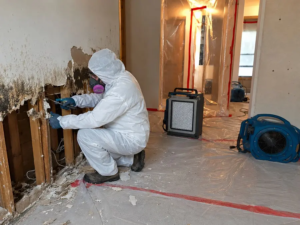
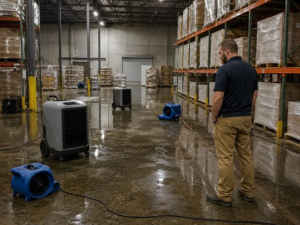
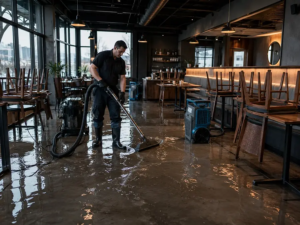
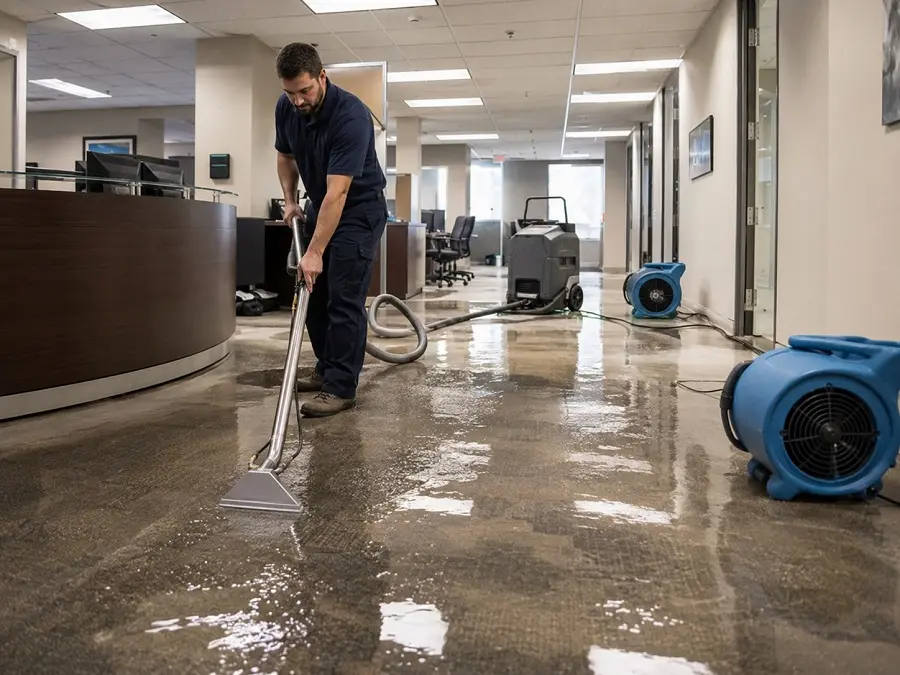
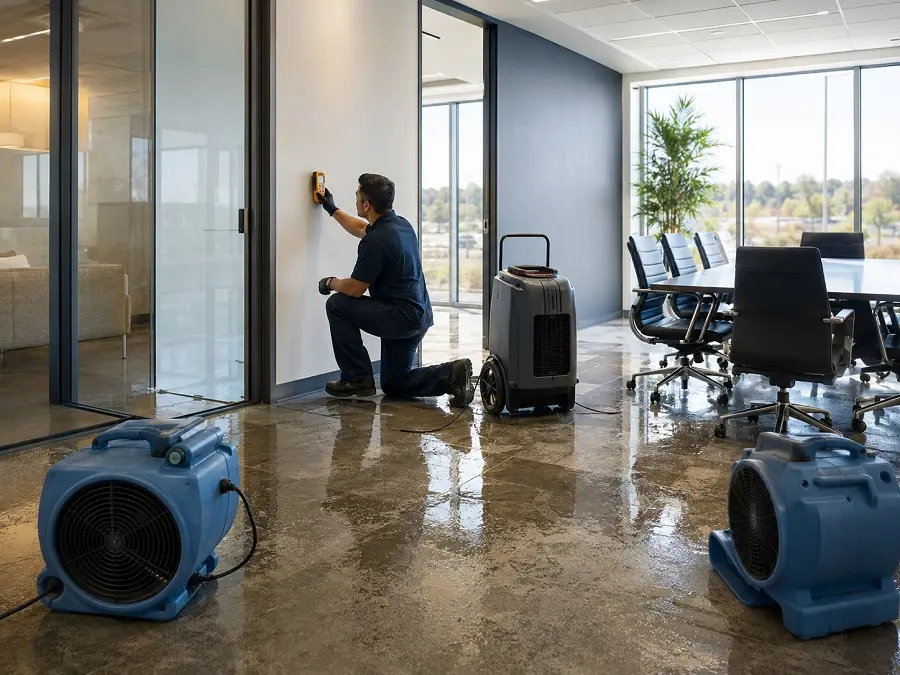
Office drying may include water extraction, carpet pad removal, baseboard removal, drywall openings, air movers, dehumidifiers, and containment. In some cases, offices can remain partially open during drying. In others, noise, cords, air movement, odors, or safety concerns may require temporary closure.
Drying should be verified with moisture readings. Returning employees to a space that feels dry but contains wet materials can create odors and repeat issues.
Cleaning and odor control
Wet carpet, furniture, and wall materials can produce musty odors if moisture remains. Cleaning should address the affected surfaces and the source of the odor. If the water source was contaminated, sanitizing and disposal decisions become more important.
Before reopening, check for lingering smells, visible stains, warped materials, and damp areas.
Reopening the office
A good reopening plan should answer these questions:
- Is the source repaired or stabilized?
- Are wet materials dry or removed?
- Are walking paths safe?
- Are cords and equipment safely placed?
- Are odors controlled?
- Have employees been told which areas are open or closed?
- Is documentation saved for insurance or landlord communication?
Call 911 Restoration of Portland
911 Restoration of Portland helps offices and commercial properties with water extraction, drying, cleanup, and restoration planning. If your office has water damage, call (503) 208-9780 for 24/7 help.
FAQ
Can employees work while office drying equipment is running?
Sometimes. It depends on safety, noise, access, cord placement, and the water source. A restoration team can help create a phased plan.
What should we do with wet ceiling tiles?
Avoid handling sagging or contaminated ceiling tiles without guidance. They may need removal and replacement after the leak source is repaired.
Does wet carpet always need replacement?
Not always. The water source, time wet, carpet type, pad condition, and moisture readings determine whether carpet can be cleaned and dried.