In the damp, rain-heavy climate of the Pacific Northwest, moisture control is a constant battle for homeowners. While most people are vigilant about checking their roofs and basements for leaks, one critical area is frequently overlooked: the crawlspace. Hidden directly beneath your living area, a dark, damp, and poorly ventilated crawlspace is the ultimate breeding ground for toxic black mold (Stachybotrys chartarum).
Ignoring the environment beneath your floorboards can lead to devastating consequences. Untreated black mold in a crawlspace doesn’t just damage your home’s structural integrity; it poses a severe, pervasive threat to the health and well-being of your family. In this article, we will explore how mold thrives in Portland crawlspaces, the health risks it presents, and how to permanently remediate the issue.
The Perfect Storm: Why Crawlspaces Harbor Mold
Mold requires three things to grow: an organic food source (like the wooden floor joists of your home), darkness, and moisture. Portland’s climate provides an abundance of the latter.
Moisture enters a crawlspace in several ways:
- Groundwater Seepage: High water tables and heavy rains can cause water to pool directly on the dirt floor of a crawlspace.
- Condensation: When warm, moist air enters a cool crawlspace through foundation vents, it condenses on cold surfaces like pipes and wooden beams.
- Plumbing Leaks: A slow, undetected leak from a bathroom or kitchen pipe above can steadily feed a massive mold colony.
Once mold spores settle on the damp wood, they rapidly colonize. Because the space is rarely inspected, the mold can grow unchecked for months or years.
The Stack Effect: How Crawlspace Mold Enters Your Home
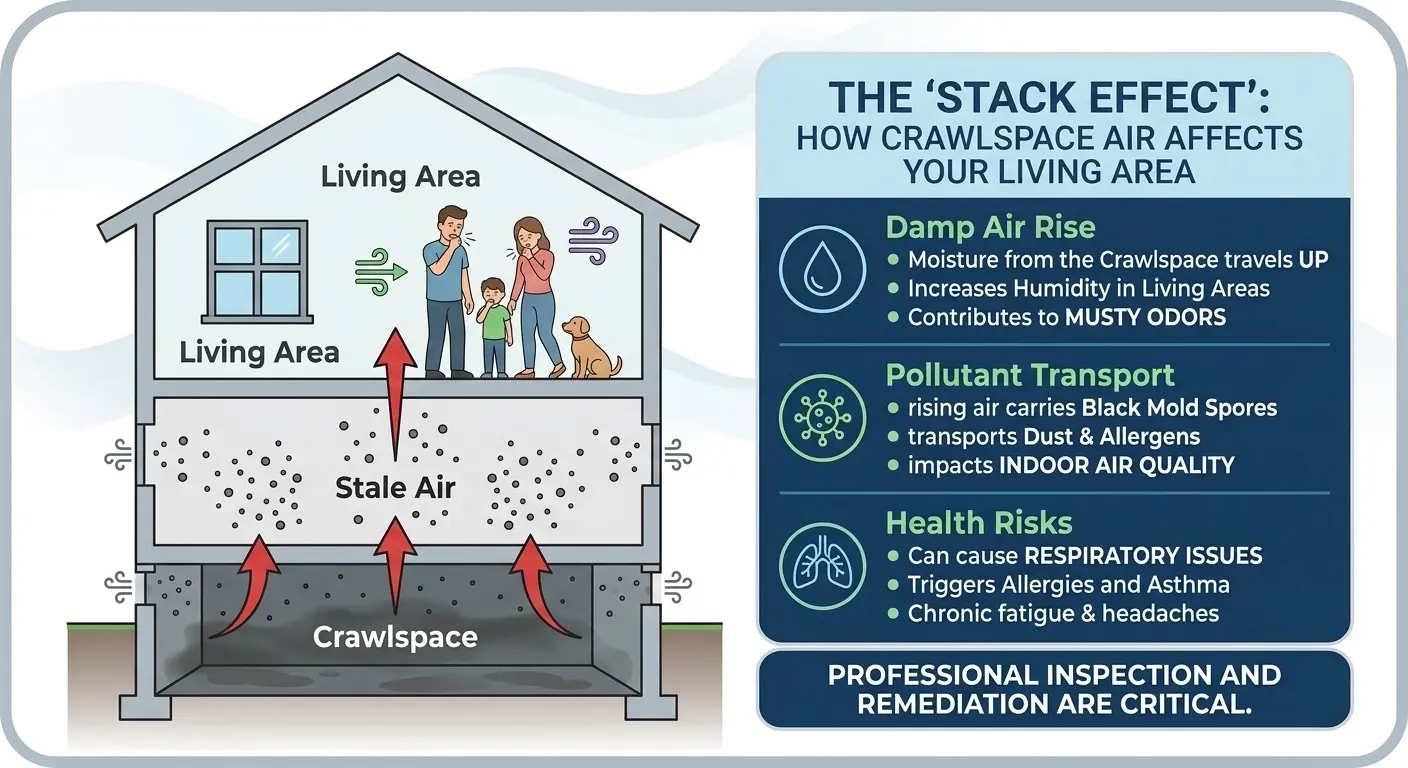
You might wonder how mold in a sealed-off crawlspace can affect the air you breathe in your living room. The answer lies in building physics, specifically a phenomenon known as the “Stack Effect.”
As warm air rises in your home and escapes through the upper levels and attic, it creates a vacuum in the lower levels. To replace the escaping air, your house sucks air up from the crawlspace. In fact, building scientists estimate that up to 50% of the air on the first floor of a home originates from the crawlspace. If your crawlspace is infested with toxic black mold, your home is continuously pulling microscopic mold spores, mycotoxins, and musty odors directly into your living areas.
Severe Health Risks of Black Mold Exposure
Exposure to Stachybotrys chartarum and other toxic molds can trigger a wide range of health issues, particularly for young children, the elderly, and individuals with compromised immune systems or pre-existing respiratory conditions like asthma.
Common symptoms of mold exposure include:
– Respiratory Distress: Chronic coughing, wheezing, shortness of breath, and sinus congestion.
– Allergic Reactions: Sneezing, runny nose, itchy and watery eyes, and skin rashes.
– Neurological Symptoms: In cases of prolonged exposure to mycotoxins (the toxic compounds produced by certain molds), individuals may experience severe headaches, chronic fatigue, memory loss, and difficulty concentrating.
– Immune System Suppression: Long-term exposure can weaken the immune system, making residents more susceptible to common colds and infections.
If you or your family members experience unexplained, lingering allergy symptoms that seem to improve when you leave the house, crawlspace mold may be the culprit.
Structural Damage: The Silent Threat
In addition to health risks, mold actively digests the organic materials it grows on. Over time, a severe mold infestation will cause wood rot, compromising the structural integrity of your floor joists and support beams. This can lead to sagging floors, cracked walls, and enormously expensive structural repairs.
Professional Remediation vs. DIY Solutions
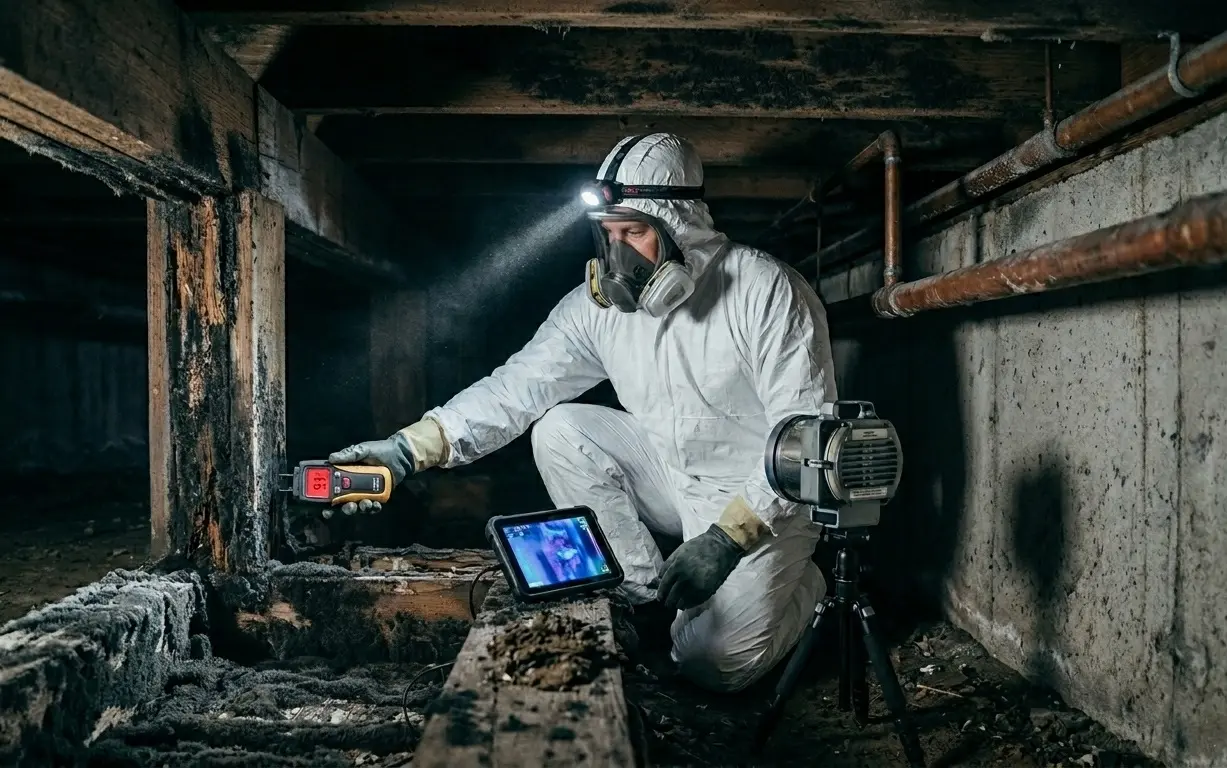
When facing a black mold infestation in a crawlspace, DIY solutions like spraying bleach are highly ineffective and dangerous. Bleach only removes the surface color of the mold; it does not kill the root system embedded in porous wood. Furthermore, working in a confined space without proper PPE (Personal Protective Equipment) exposes you to concentrated doses of toxic spores.
True mold remediation requires a professional, multi-step approach:
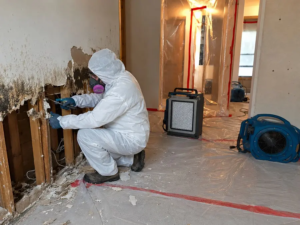
- Containment: Professionals seal off the area to prevent spores from spreading into the main living spaces during cleanup.
- Air Filtration: High-efficiency negative air machines with HEPA filters scrub the air, capturing airborne mold spores.
- Removal and Remediation: Technicians physically remove the mold using antimicrobial treatments and specialized brushing or blasting techniques.
- Moisture Control (Encapsulation): To prevent the mold from returning, the underlying moisture issue must be solved. This often involves crawlspace encapsulation—installing a heavy-duty vapor barrier over the dirt floor and walls, sealing vents, and installing a commercial-grade dehumidifier to keep relative humidity below 50%.
Breathe Easier with 911 Restoration
Your home should be a safe haven, not a source of illness. If you suspect black mold is lurking in your crawlspace, contact the experts at 911 Restoration of Portland. Our IICRC-certified mold remediation team will conduct a thorough inspection, safely eliminate the toxic growth, and implement advanced moisture control solutions like encapsulation to ensure the mold never returns. Protect your health and your property – call us today for a Fresh Start.