A burst pipe can turn a normal day into an emergency in minutes. Water may pour into a bathroom, kitchen, laundry room, basement, ceiling cavity, or crawlspace before anyone realizes what happened. In Portland homes, pipe breaks can be caused by freezing weather, aging plumbing, failed supply lines, appliance connections, or pressure issues.
Once the water is stopped, the cleanup is just beginning. The most important question is not only how much water you can see. It is how far the water traveled.
First steps after a burst pipe
If you discover an active pipe break, shut off the nearest valve or the main water supply if you can do so safely. Avoid walking through water if electricity may be involved. Move children and pets away from the affected area. Then take clear photos and video before major cleanup begins.
Do not assume that towels and a mop are enough. Pipe breaks often send water under flooring, into wall cavities, behind cabinets, and down through ceilings. Even a short leak can affect multiple layers of the home.
Call the right professionals
A plumber repairs the pipe. A restoration company dries and restores the property. Both may be needed. The plumber stops the source and makes plumbing repairs. The restoration team extracts water, checks moisture, removes damaged materials, places drying equipment, and documents the affected areas.
If you only repair the pipe but leave wet materials behind, the home may continue to develop damage after the visible water is gone.
Where burst pipe water hides
Pipe breaks commonly affect more than the room where water first appears. Water can move into:
- Carpet and carpet padding.
- Hardwood or laminate flooring.
- Subflooring and underlayment.
- Drywall behind baseboards.
- Kitchen and bathroom cabinets.
- Ceiling drywall and insulation.
- Crawlspace insulation and framing.
- Wall cavities below bathrooms and laundry rooms.
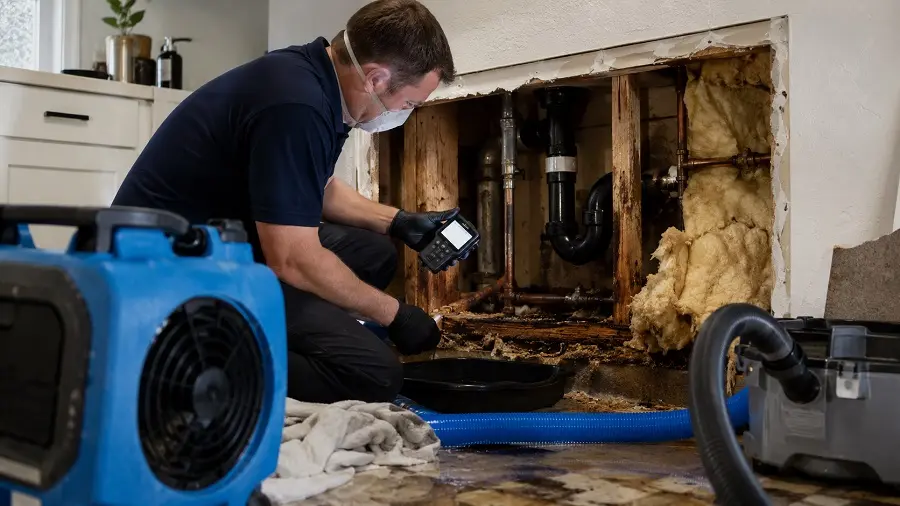
Moisture mapping is important because surfaces can dry faster than the materials underneath. A floor may feel dry while the subfloor is still wet. A ceiling stain may look small even when insulation above it is saturated.
What professional burst pipe cleanup includes
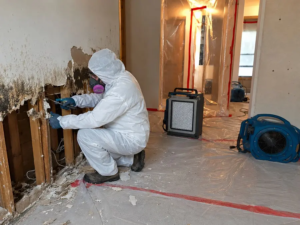
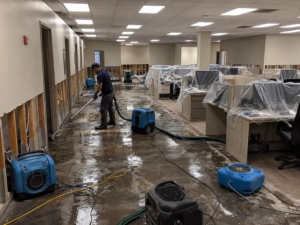
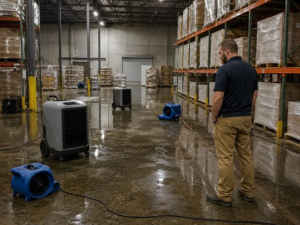
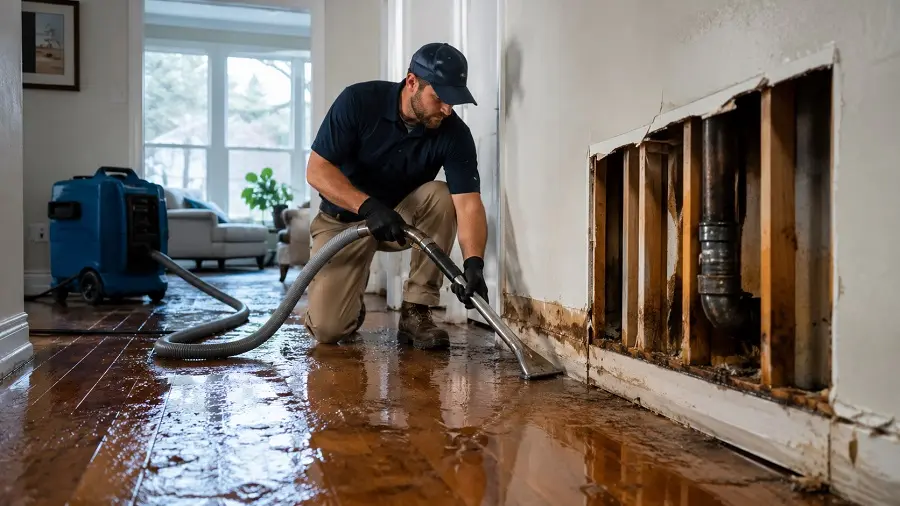
A complete cleanup should begin with inspection and safety control. After that, technicians may extract standing water, remove wet carpet pad, detach baseboards, open walls or ceilings where needed, set air movers and dehumidifiers, and take moisture readings during the drying process.
If the leak affected a crawlspace, the inspection should include insulation, vapor barrier condition, wood framing, and standing water under the home. Crawlspace moisture can create odors and future mold concerns if it is ignored.
What not to do after a pipe break
Do not paint over stains before drying is complete. Do not reinstall trim over damp drywall. Do not run heat without a drying plan, because warm air alone can move moisture into other areas. Do not assume a small pipe break is minor just because the water stopped. The volume of water released by a pressurized line can be significant even in a short time.
Also avoid throwing away damaged materials before documentation unless safety requires it. Photos, descriptions, and invoices may be useful if you file an insurance claim.
Insurance documentation tips
After a burst pipe, keep records of the date and time the loss was discovered, the suspected source, emergency steps taken, plumbing invoices, restoration estimates, drying logs, and photos of affected areas. If an adjuster visits, ask what documentation they need and keep copies of all communication.
Coverage depends on your policy and the circumstances, but clear documentation can help reduce confusion.
Preventing future pipe damage
After cleanup, ask what caused the break. If freezing contributed, consider insulation around vulnerable pipes, sealing air leaks near plumbing, and maintaining indoor heat during cold weather. If a supply line failed, inspect other aging supply lines. If pressure was involved, ask a plumber whether pressure regulation should be checked.
When to call 911 Restoration of Portland
Call for burst pipe cleanup if water affected flooring, ceilings, walls, cabinets, carpet, insulation, or a crawlspace. 911 Restoration of Portland can help with water extraction, structural drying, moisture mapping, and restoration planning after a pipe break. For emergency help, call (503) 208-9780.
FAQ
Can I clean up a burst pipe myself?
You may be able to wipe up a very small, contained leak. If water spread under flooring, into walls, through ceilings, or into a crawlspace, professional drying is recommended.
How long does drying take after a burst pipe?
Drying time depends on the materials affected, how long they were wet, and the amount of water released. Moisture readings should guide the timeline.
Should I keep damaged flooring for the insurance adjuster?
Ask your insurance company what they prefer. When materials must be removed for safety or drying, take photos first and keep detailed documentation.