When water is spreading through a home or business, the first 24 hours matter. Standing water can move under flooring, behind baseboards, into wall cavities, and down into crawlspaces before the damage is visible from the room where the leak started. For Portland property owners, the goal is simple: stop the source, remove the water, stabilize the structure, and begin drying before the moisture turns into a bigger restoration project.
This guide explains what usually happens during emergency water extraction in Portland and what you can do while a restoration team is on the way.
Step 1: Stop the water source if it is safe
If the water is coming from a supply line, fixture, appliance, or burst pipe, shut off the closest valve or the main water shutoff if you can reach it safely. Do not enter standing water if electrical outlets, cords, or appliances may be affected. If the water may contain sewage, chemicals, or outdoor floodwater, avoid contact and wait for professional help.
For clean water leaks, simple early actions can help limit damage:
- Move small valuables, rugs, and boxes away from the wet area.
- Place foil or plastic under furniture legs if the floor is wet.
- Avoid using a household vacuum unless it is specifically designed for wet pickup.
- Take photos of affected rooms, floors, ceilings, and belongings before moving anything major.
The goal is not to complete the cleanup yourself. The goal is to reduce immediate risk and preserve useful documentation.
Step 2: Identify where the water traveled
Water rarely stays in one place. A bathroom overflow can run under hallway flooring. A washing machine leak can travel beneath cabinets. A second-floor pipe break can damage ceilings, insulation, walls, and flooring below. In homes with crawlspaces, water may also move downward and create moisture problems that are easy to miss.
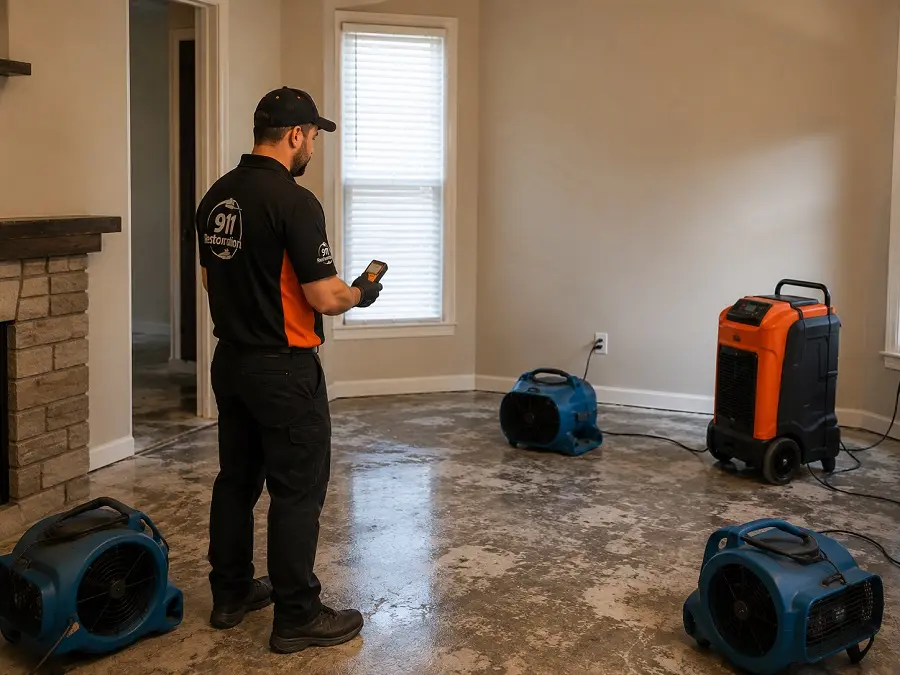
A restoration technician should inspect the obvious wet area and the adjacent materials. That can include baseboards, drywall, flooring, carpet padding, cabinets, subflooring, ceiling materials, and crawlspace access points. Moisture meters and thermal imaging can help determine whether the surface looks dry while the material underneath is still holding moisture.
Step 3: Remove standing water quickly
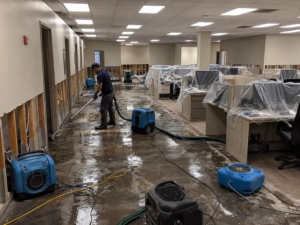
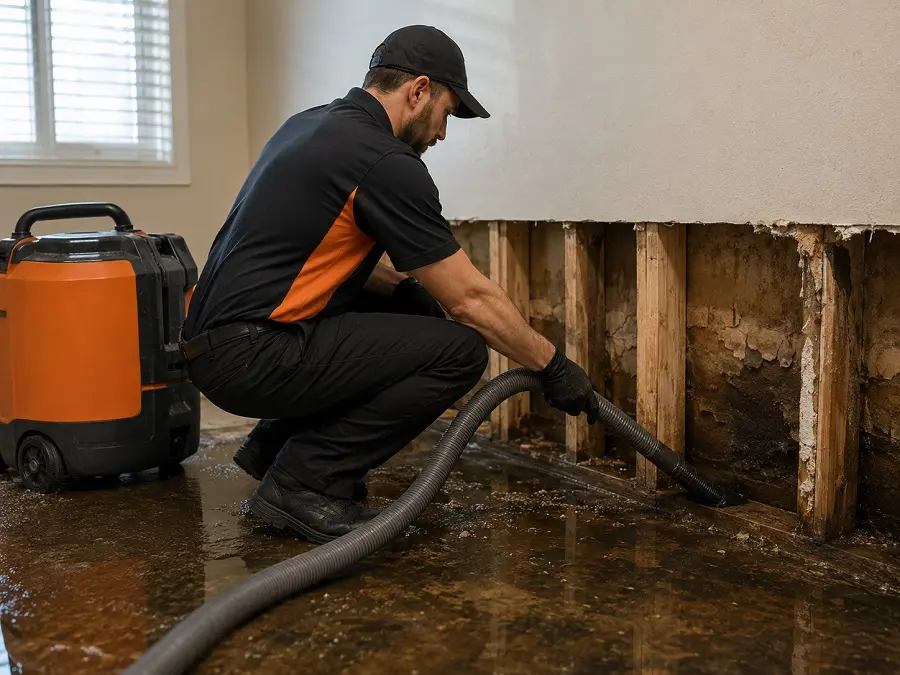
Emergency water extraction is the high-volume removal phase. Depending on the amount of water, technicians may use portable extractors, truck-mounted extraction units, submersible pumps, or specialty tools for carpet, hard flooring, and tight spaces.
The faster bulk water is removed, the easier it is to dry the remaining materials. Extraction can also reduce the amount of demolition needed. For example, carpet may still need to be removed in some situations, but removing standing water quickly can help determine what can be dried, what needs disposal, and what needs reconstruction.
Step 4: Remove materials that cannot be safely dried
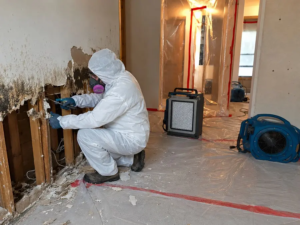
Not every wet material should be saved. Saturated carpet pad, damaged drywall, wet insulation, contaminated porous materials, and swollen wood products may need to be removed. This decision depends on the water source, how long materials were wet, whether contamination is present, and whether the material can be dried to an acceptable level.
This is where professional judgment matters. Removing too little can trap moisture. Removing too much can increase repair costs unnecessarily. A good restoration plan focuses on controlled demolition only where it is needed.
Step 5: Start structural drying
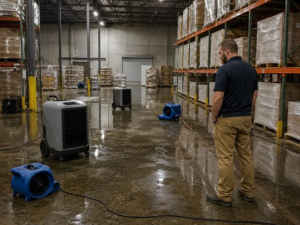
Extraction removes the visible water. Drying removes the moisture that remains inside building materials. Air movers, dehumidifiers, containment, and regular moisture readings are used to dry the affected area in a controlled way. In Portland homes, this step is especially important because enclosed moisture in walls, crawlspaces, cabinets, and subfloors can create ongoing odor and mold concerns.
Drying should be monitored rather than guessed. A room may feel dry while the subfloor, framing, or wall cavity is still wet. That is why moisture readings are usually taken at the start and throughout the drying process.
Step 6: Document the damage for insurance
Water damage claims can become confusing when there are multiple affected rooms, hidden wet materials, or repairs that happen in phases. Photos, moisture maps, equipment logs, and clear descriptions of the loss can help support the claim. Keep records of the date and time you discovered the leak, the suspected source, emergency actions taken, and any communication with plumbers, property managers, or insurance representatives.
When to call for emergency water extraction
Call for professional water extraction when water covers flooring, soaks carpet, affects walls or ceilings, reaches cabinets, enters a crawlspace, or comes from an unknown or contaminated source. You should also call if the leak occurred while you were away, because the materials may have been wet longer than they appear.
911 Restoration of Portland provides 24/7 water damage help for homes and businesses across the Portland area. If you are dealing with standing water, a burst pipe, a flooded room, or hidden moisture after a leak, call (503) 208-9780.
FAQ
Can I dry water damage with fans from home?
Household fans can move air across the surface, but they do not measure hidden moisture or remove enough humidity for many water damage situations. Improper drying can leave moisture behind in walls, flooring, and subflooring.
How long does emergency water extraction take?
The extraction phase may take a few hours or longer depending on the amount of water and the size of the affected area. The full drying process usually takes longer and should be monitored with moisture readings.
Should I call a plumber or a restoration company first?
If active plumbing is causing the leak, a plumber may be needed to stop or repair the source. A restoration company handles water removal, drying, damage assessment, and cleanup. In many emergencies, both are involved.